You look at a doorknob dozens of times a day, right?
 The handle you turn to open a door
So could you draw how one is built?
If 1 means you can’t draw it at all and 5 means you could draw it perfectly, what would you give yourself?
You probably picked something like a 4.
Now go ahead and draw one.
Really, try it.
Thirty seconds with a pen and paper is enough.

Finished?
Here’s the answer.
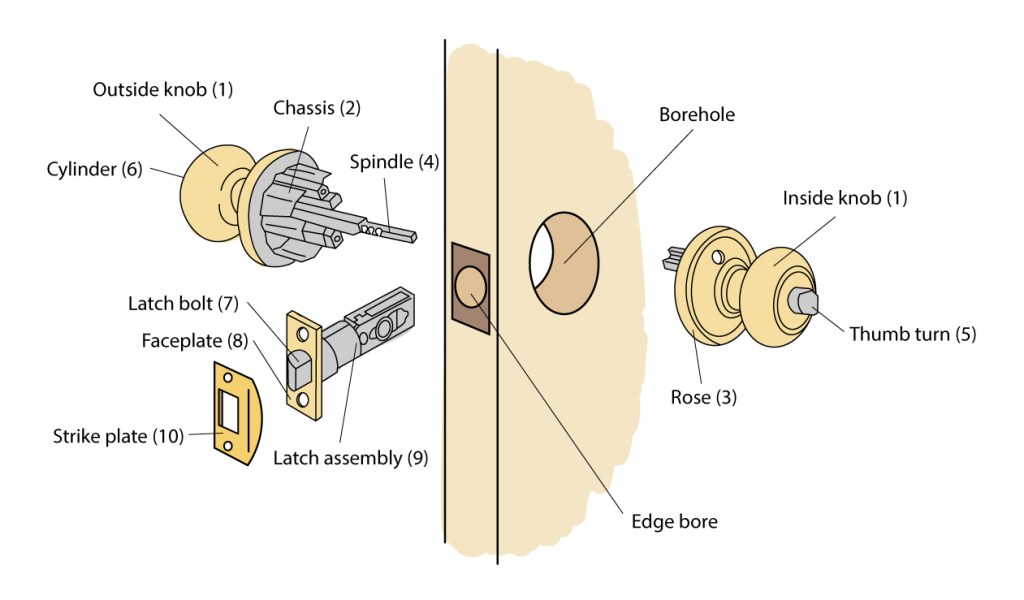 Source: https://dailyhomesafety.com/parts-of-a-door-knob/
You thought you knew doorknobs, and you probably couldn’t draw one.
The lesson of this exercise: “the world is more complicated than you think.”
Which is today’s subject.
A kaleidoscope, not a vending machine
The world is complicated.
If a single door handle is that involved, how involved are politics, the economy, or technology?
And a door handle doesn’t change, while the world does.
In doorknob terms, the inside of the handle rearranges itself every time you open the door.
The Australian toad story is a good example.
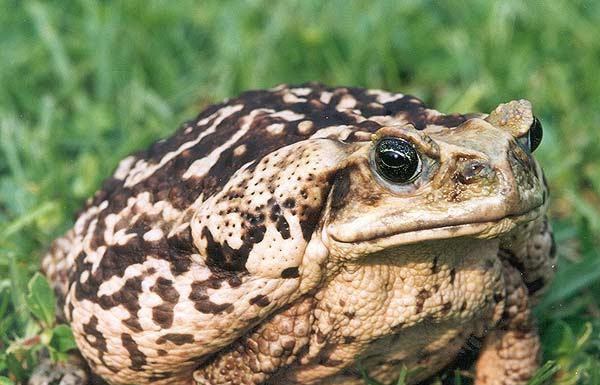 Australian toad
Twenty years ago the Australian government released toads to wipe out a pest, since toads eat them. A few years later the pests were down.
But Australia had nothing that eats toads, so once the pests thinned out the toads kept multiplying.
They ended up doing serious damage to the country’s ecosystem.
Everyone planned for the toads eating the pests, and nobody asked what would happen to the toads afterward. That’s how it went wrong.
Events that follow on from a first event, in a chain, are called second-order events.
Once second and third-order events start interacting, the future gets much harder to call.
So the world is complicated, and it moves.
We tend to treat it as predictable, like a vending machine.
Press the cola button, get a cola. That’s how we approach the world.
But the world isn’t a vending machine running on rules.
(Trade stocks for a while and you’ll feel this directly.)
It’s closer to a kaleidoscope, where every turn gives you a new pattern.
 Source: https://giphy.com/gifs/justin-kaleidoscope-xT39D6ljE4N3kBJs7S
There are rules in there, but we don’t know all of them, and they keep changing.
That creates a big problem.
The future is hard to predict.
Can anyone predict the future?
This chart shows the market’s forecasts for the US policy rate.
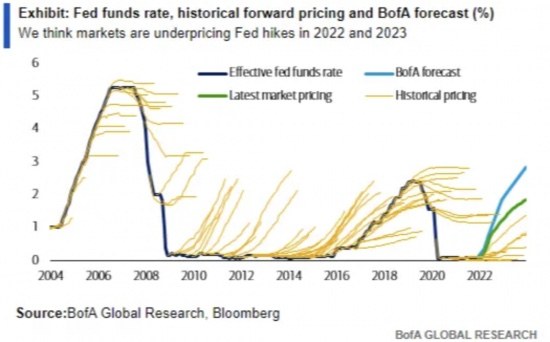 Source: https://www.ft.com/content/3bf4af71-cf1f-49c8-8ec5-c559037111ab
It shows how hard forecasting is.
Each yellow line is the rate the market expected at that moment. The blue line is the rate that actually happened.
Look closely and most of the dozens of yellow lines miss. Not slightly off either. Most of them miss the direction entirely.
As above, the world is complicated and it changes, which is why the future resists prediction.
There is a standard move people reach for here.
Simplify the complicated world, then solve the simpler problem.
Does simplifying actually let you understand the world and call the future?
Can you simplify the world?
Does simplifying a complicated world make it predictable?
The milkshake story from Competing Against Luck answers that.
A US milkshake chain wanted to raise sales.

So they interviewed customers, trying to work out what to change to get people buying more.
They changed the flavor, the texture, the smell, the color, the ingredients. Sales stayed flat.
So they ran the customer research again from scratch. This time they found that milkshakes sold in two big waves, one in the morning and one in the afternoon.
The morning buyers were truckers with a long drive ahead and nothing to do with their mouths. The afternoon buyers were parents getting their kid a small treat.
The two wants are opposites.
Truckers preferred a bigger cup and sweeter ingredients. Parents preferred a smaller cup and healthier ones. A fix for one group is wrong for the other. Treat the whole customer base as one lump and the problem has no solution.
A complicated problem doesn’t yield to a simple approach on its own.
Simplify a complicated problem and you lose the part that mattered.
Everything should be made as simple as possible,
but not simpler.
- Einstein
So what if you hand the forecasting to an expert?
Can an expert see the future?
Philip Tetlock, an American professor, spent twenty years testing 300 experts on exactly that. Their forecasting turned out to be poor. Accuracy came in at roughly the level of a chimpanzee throwing darts at random.
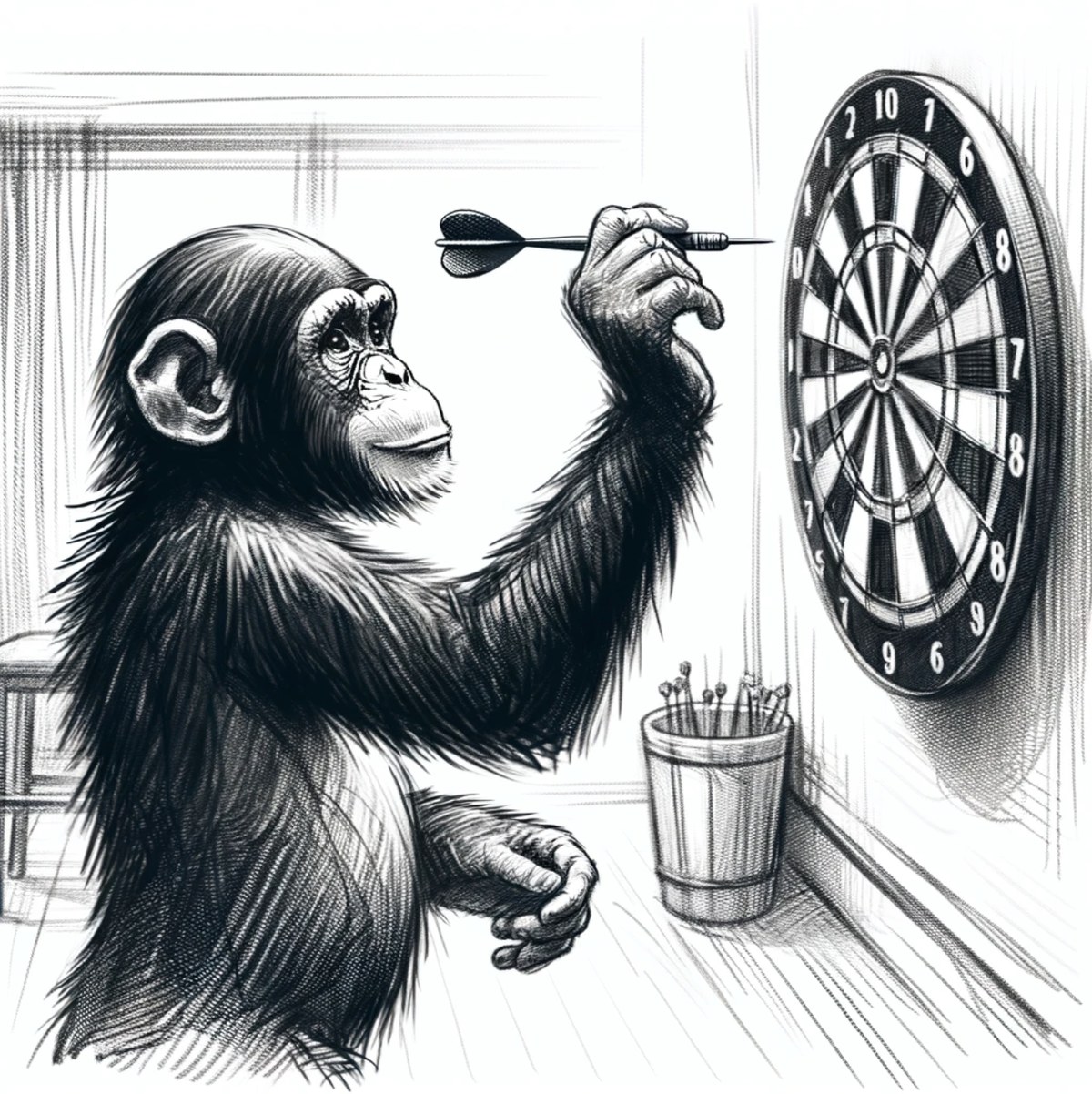
Experts have trouble with the future too.
For what it’s worth, in later research Tetlock found a small group of ordinary people who forecast far better than the experts. (I’ll cover the techniques they used in a later post. Follow me and turn on notifications!)
Want practical tips that make you a little smarter every week?
I cover persuasion, marketing, writing, and the other skills modern life demands.
Subscribe now and get notified when a new post goes up!
Howard Marks, who introduced second-order thinking, puts it this way in The Most Important Thing.
You can get the future right once,
but getting it right consistently is hard.
Experts are no different.
Calling the future accurately is about as easy as hitting a moving dartboard with your eyes shut.
And even an accurate forecast isn’t necessarily a good one.
Three conditions for a useful forecast
A forecast has to meet three conditions to be useful.
A useful forecast calls 1) a future that pays, 2) consistently, 3) at low risk.
1) A call with no payoff, 2) a call that lands once in a while, 3) a call that costs you dearly when it’s wrong. Each of those is less useful.
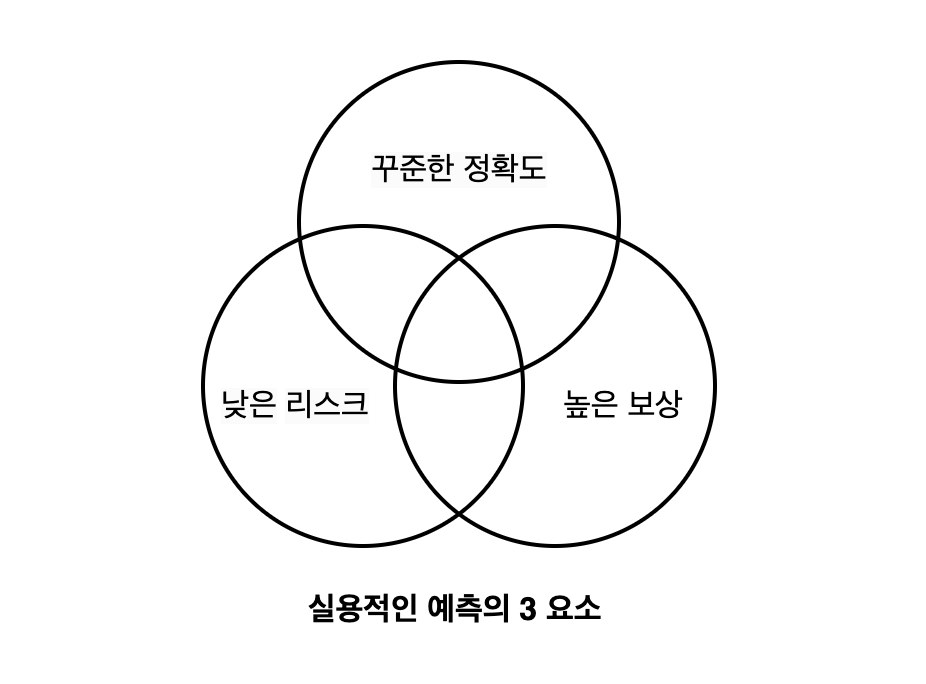
A call with a huge payoff that lands once in a thousand tries isn’t a useful one.
The market forecasters who announce a crash every year work like this. They keep calling a crash until a crash turns up. A big one comes along roughly once a decade, so one call eventually lands and they get famous. Count the misses and the accuracy is low enough to make the forecast worthless.
Forecasts that meet all three conditions are rare.
This has all been the pessimistic half so far.
Forecasting is the base of a good decision, and forecasting is hard.
So can we not beat a chimpanzee throwing darts?
Fortunately there are two ways to forecast well without calling anything accurately.
I’ll cover them in the next post.
Want practical tips that make you a little smarter every week?
I cover persuasion, marketing, writing, and the other skills modern life demands.
Subscribe now and get notified when a new post goes up!
References: Competing Against Luck, The Signal and the Noise, blog
You might like these too!