Let’s look at Chinese war strategy through “Unrestricted Warfare”, and at 1) how Charlie Munger thinks, and 2) how a startup beats a large company.
Everywhere is a battlefield
Early in the Second World War, Britain was losing to Germany. Prime Minister Winston Churchill gave a speech to shore up the country’s will to fight.
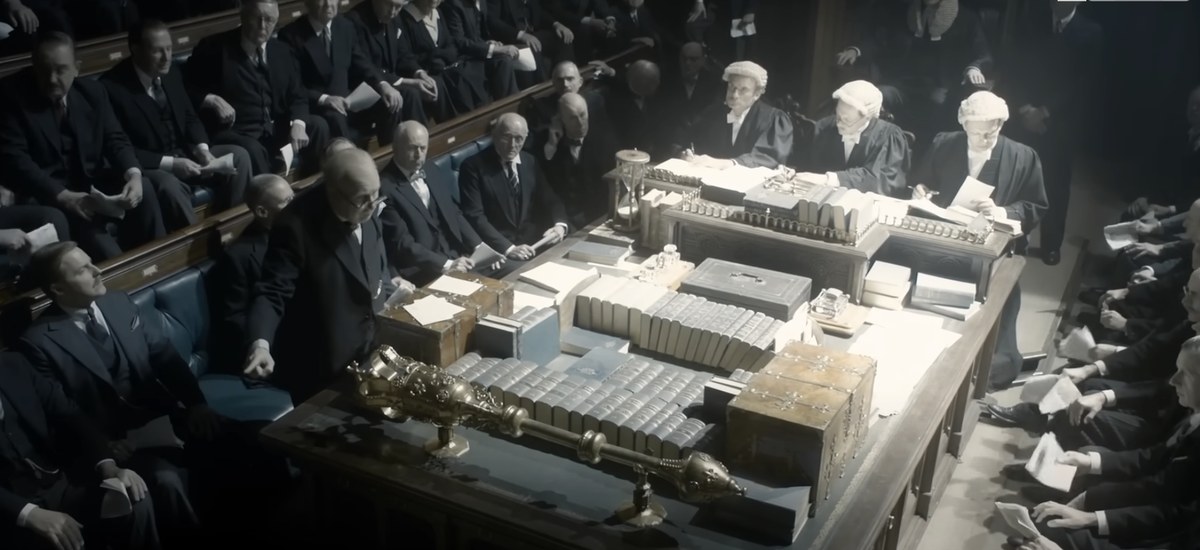 Source: the film Darkest Hour
We shall go on to the end. We shall fight in France, we shall fight on the seas and oceans, we shall fight with growing confidence and growing strength in the air. (…) We shall fight on the beaches, we shall fight on the landing grounds, we shall fight in the fields and in the streets, we shall fight in the hills. We shall never surrender.
In the Second World War, city and countryside, beach and sea, sky and deep water, every physical space was a battlefield.
It’s different now.
These days mental space is a battlefield too.
People have been arguing for a hundred years that war has to be fought in every field: the economy, broadcasting, culture, communications, religion.
And twenty years ago a Chinese military officer argued for twenty-four kinds of warfare.
Today, through the Chinese strategy book Unrestricted Warfare (超限戰) and Gramsci’s war of position (陣地戰),
let’s look at the war we’re heading into.
Unrestricted Warfare: China’s twenty-four war plans
Unrestricted Warfare is a 1999 book by Qiao Liang and Wang Xiangsui, both officers in the People’s Liberation Army. 超限 means without limits, so the title means war without limits.
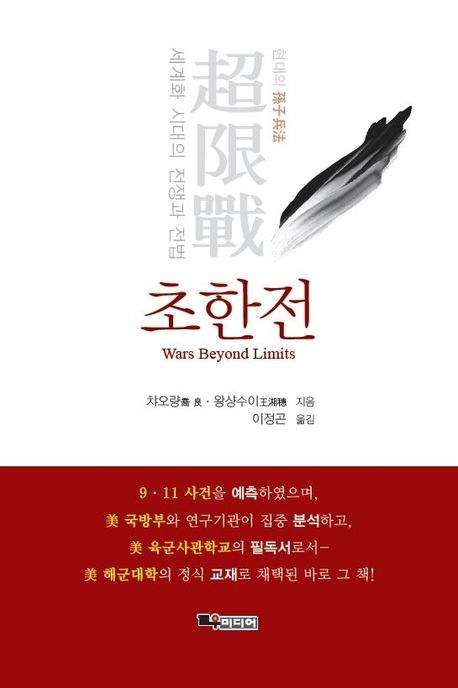 A Korean translation finally came out in 2021.
The book’s aim is to find a way for a relatively weak China to become the dominant world power.
Its conclusion: war that goes past every ethic, norm, and limit, using terrorism and anything else to produce chaos and fear.
Old wars were fought with guns and missiles. The book argues that future ones will be fought without limits, terrorism and media and cyber included. It got famous for naming bin Laden directly and predicting 9/11. It became required reading at West Point and a textbook at the US Naval Academy.
Going past the limits means paying no attention to international law, norms, or ethics, using any means at hand, and fighting with indiscriminate combined attacks.
Unrestricted Warfare: go past what the enemy can imagine
Here’s the passage people point to as the 9/11 prediction.
Have you ever imagined a war that combines
Schwarzkopf (military war) + bin Laden (terror war) +
George Soros (financial war) + Robert Morris (cyber war)?
- Unrestricted Warfare
Unrestricted Warfare goes past morality and custom too. Professor Lee Ji-yong, author of 중국의 초한전: 새로운 전쟁의 도래, reports that at a book talk for Unrestricted Warfare held inside China, a Chinese student asked what should be done about Chinese morality and custom, and Qiao Liang and Wang Xiangsui answered, “That question shows you haven’t understood the book. You have to go beyond morality and custom. Only by becoming the most vicious devil, past anything the enemy can imagine, can you defeat him.” (source)
Last April the US House of Representatives published findings that the Chinese government was giving cash subsidies and awards to companies openly trafficking fentanyl precursors and synthetic drugs.
 Source: https://news.kbs.co.kr/news/pc/view/view.do?ncd=7942020
News like that reads like the strategy playing out.
The book lays out twenty-four methods that put guns and bombs alongside drugs, finance, media, and ideology.
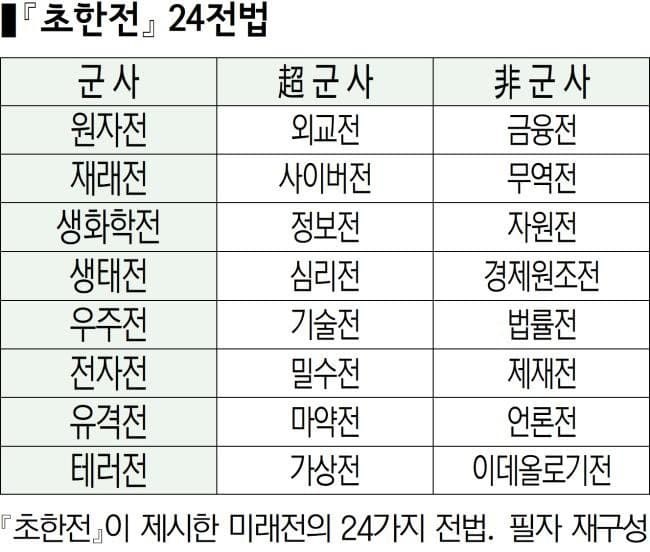 Source: https://kookbang.dema.mil.kr/newsWeb/20200504/1/BBSMSTR\_000000100097/view.do
Its point is that you win the next war by mixing the twenty-four methods.
In the future, it says, the center of war will be specialized attacks: cyber operations to cause confusion, capturing the press to swing public opinion, stealing technology, and shaking an economy with trade barriers.
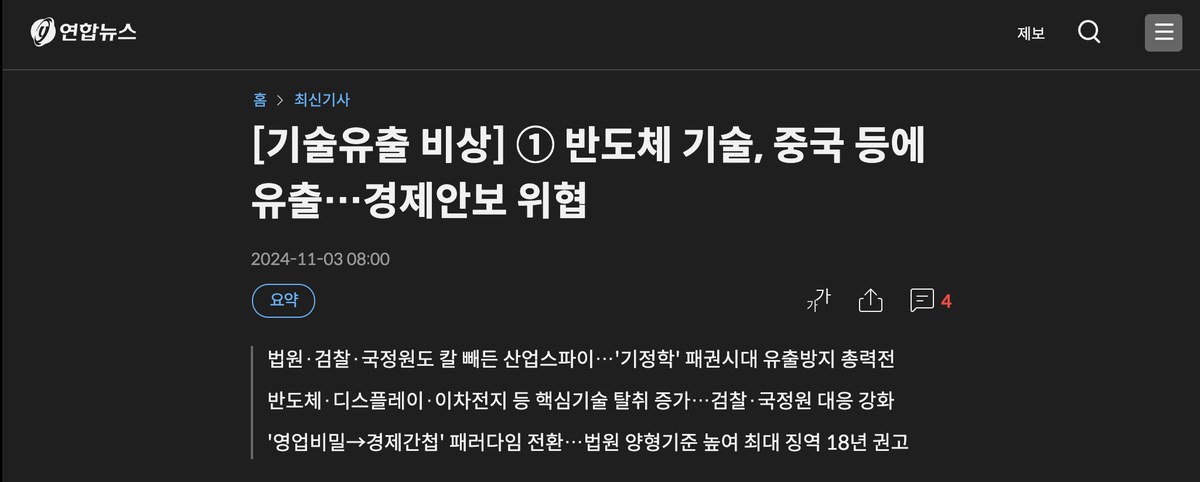
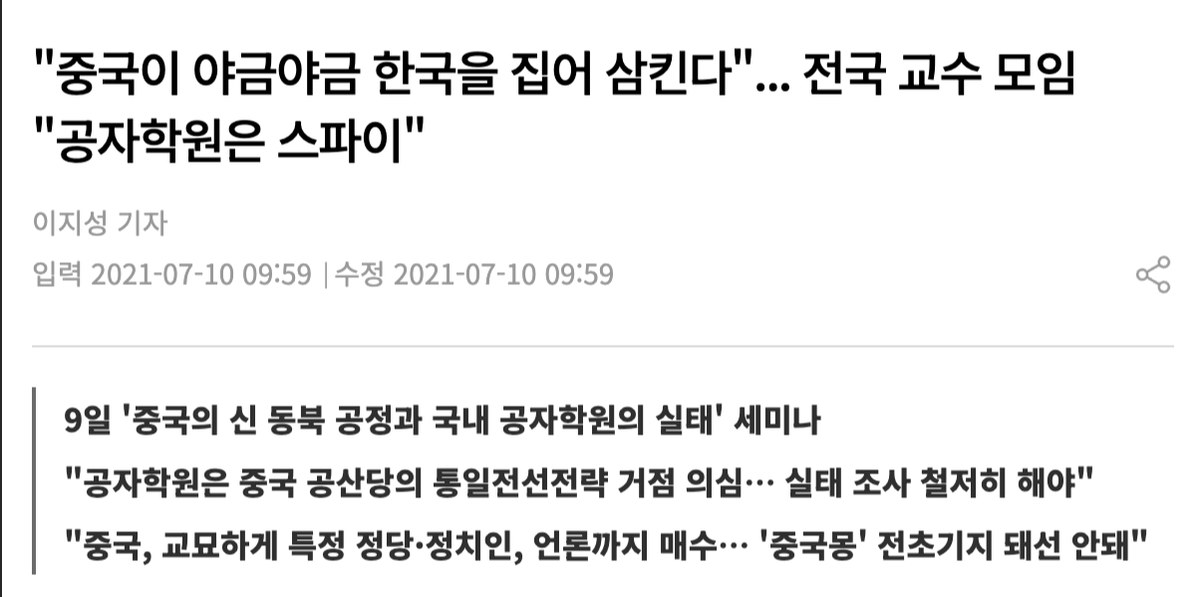 https://www.newdaily.co.kr/site/data/html/2021/07/10/2021071000009.html
Counting broadcasting, the press, culture, and ideology as parts of a war isn’t something this book invented.
Someone in Italy was making a similar argument in the 1910s.
War of position: the quiet fight over public opinion
In much the same vein, the Italian thinker Antonio Gramsci proposed the war of position. Gramsci held that force alone can’t change a society.
Instead, he argued, you change it from a range of positions: education, culture, art, the press.
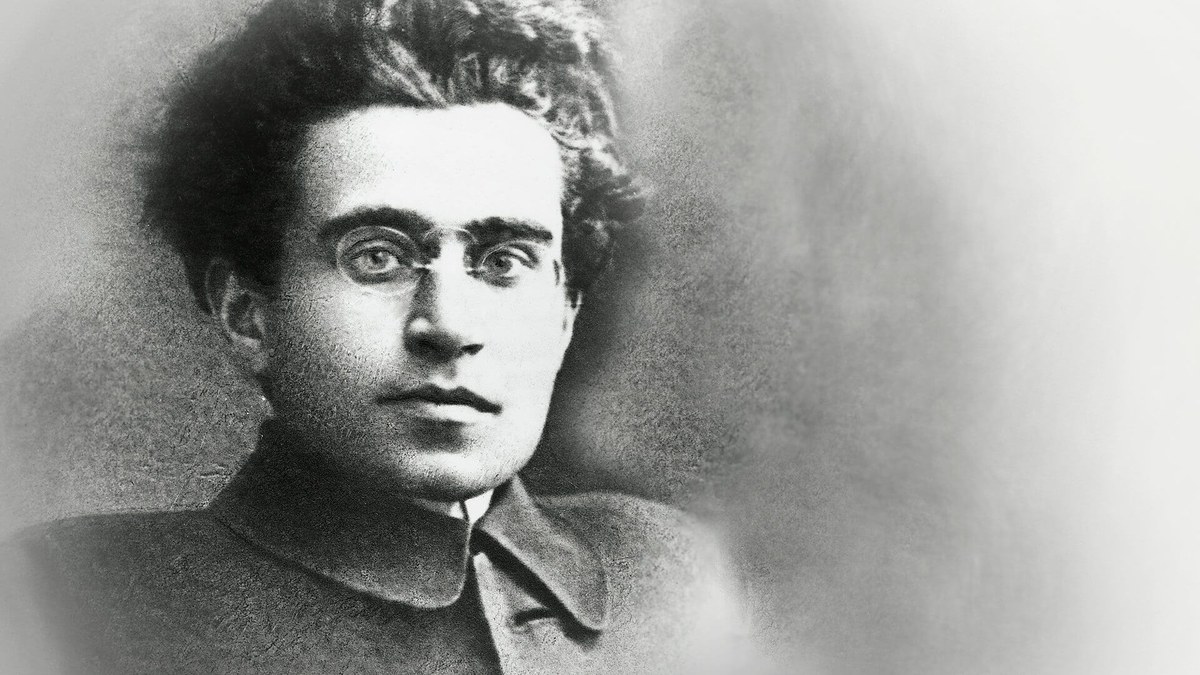 Antonio Gramsci
The theory is that you wear down the ideological foundation bit by bit from those positions, change what a society treats as common sense, and move opinion that way.
Gramsci calls this war of ideas the war of position. Schools, culture, art, and the press are the society’s battlefields and its positions. Each field fights for public support by changing opinion rather than by drawing blood.
That runs alongside the unlimited battlefield in Unrestricted Warfare. Both theories stretch war across every part of a society. Change opinion and stir up confusion from places nobody is watching, then finish with military action.
Win first, then fight
(先勝求戰) The Art of War
The whole world is a battlefield
Looking at what has actually happened, both theories (ethics aside) called the future correctly.
Future wars will run less on bullets and military force and more on information, public opinion, the economy, the law, and the rest of a society’s machinery.
Politics, YouTube, social media, financial markets, schools, any corner of ordinary life can become a battlefield.
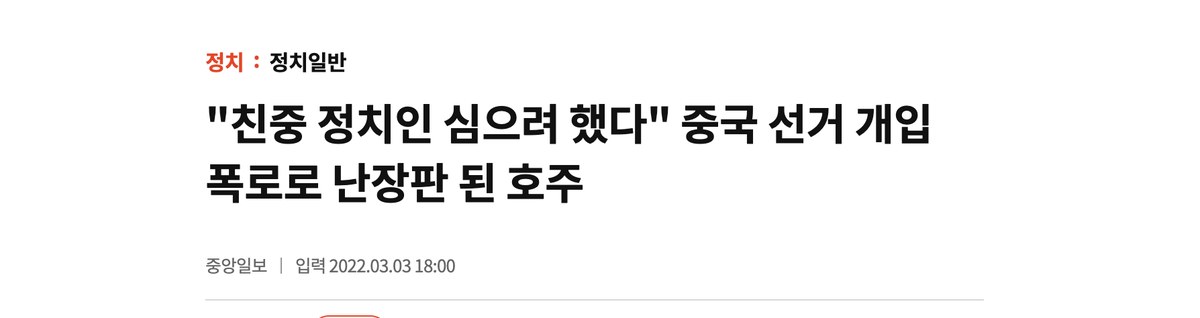 https://www.joongang.co.kr/article/25052717#home
It’s already working on the places that look safest: schools, local communities, political institutions.
Twenty-five years have passed since the book came out.
I wrote “war plans” in the heading, but these are things already underway.
And the book has a second use.
Unrestricted Warfare, Charlie Munger, and startups
There’s another reason I brought it up. Mixing twenty-four methods into creative tactics connects to the mental-model thinking I keep mentioning. Warren Buffett’s partner Charlie Munger, who I’ll cover in the next post, works the same way.
Munger talks constantly about the latticework of mental models and the lollapalooza effect, and both relate to how Unrestricted Warfare approaches a problem.
The latticework says you judge more accurately when you use several perspectives, several frames, at once. The twenty-four methods look at war from many angles; you get closer to what a thing actually is by coming at it from many angles too.
 Perspectives connected like a lattice.
The lollapalooza effect is what happens when several effects combine and the result amplifies. Run the twenty-four methods one at a time and none is that strong. Run them together and they can bring a society down. Same effect.
From a startup’s side, the way a weaker player beats the incumbents is in this book too. You adopt strategies the incumbents don’t count as strategy. Then you run several moderately effective ones in parallel and wait for the lollapalooza effect to compound them. It’s a rare way for David to beat Goliath, and a strong one.
Combine perspectives and strategies like this and the synergy can be explosive. Next post I’ll get into the specifics!
Want practical tips that make you a little smarter every week?
I cover persuasion, marketing, writing, and the other skills modern life demands.
Subscribe now and get notified when a new post goes up!
P.S. “Unrestricted Warfare” came out in Korean in 2021 after six years of translation work. It’s theory-heavy and not an easy read, so I’d point you at YouTube as well. (Buying the translation is a way of supporting it.) Author book talk, YouTube, article to read alongside it 1, article 2
P.P.S. The weakness the book points at is that a great power is bad at asymmetric war. Seen that way, Palantir starts to look different.
You might like these too!