Do you know the story called “Planck and his driver”?
It got famous because Warren Buffett’s partner Charlie Munger told it.
It shows the difference between shallow knowledge and deep knowledge
After Max Planck won the Nobel Prize, he toured Germany giving lectures. The same talk, the same content, over and over.
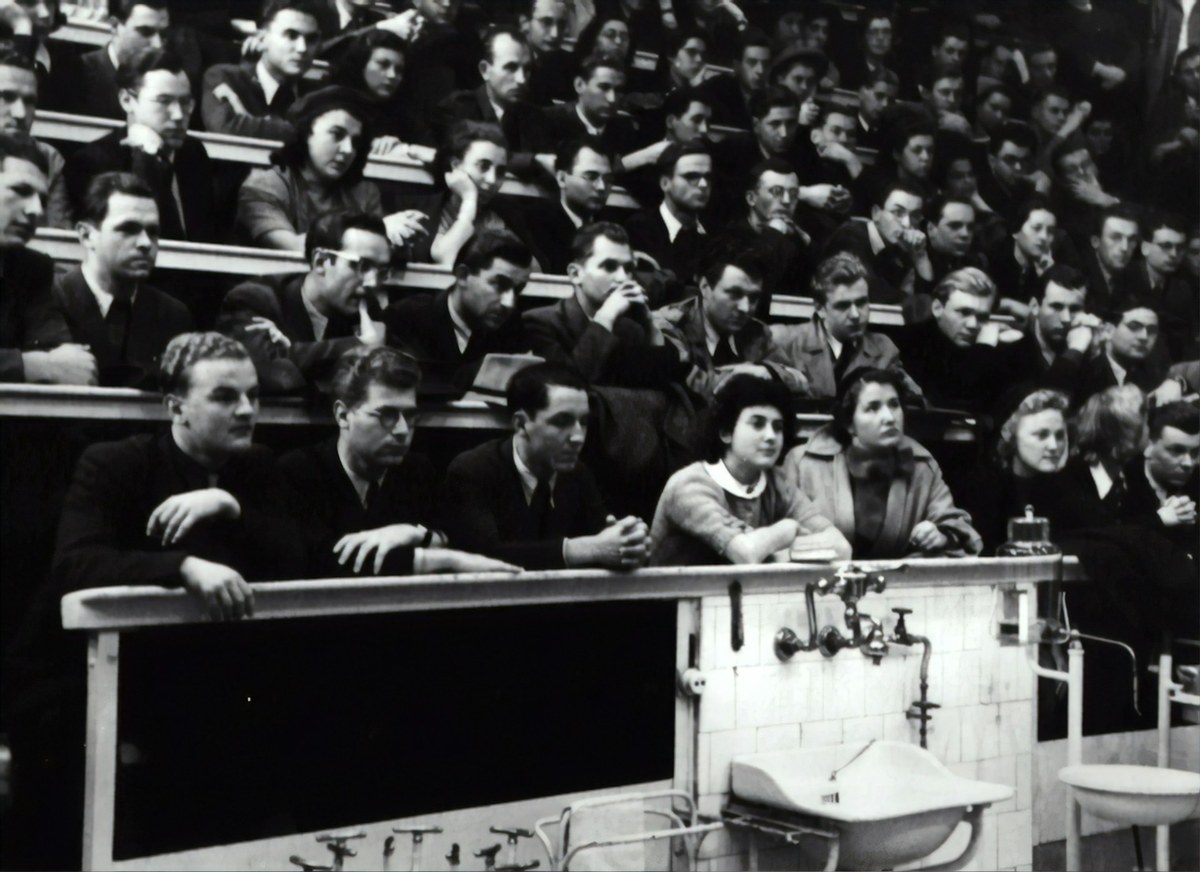
One day his driver made him an offer. “I’ve sat through your lecture so many times that I know the whole thing by heart. What if I pretend to be you today and give it instead? You can sit in the audience pretending to be the driver.”
Planck said fine, and the driver, who had heard the talk dozens of times, delivered it from memory and did it beautifully. Planck sat in the audience playing the driver.
Then, as the lecture ended, a scientist in the room suddenly asked the driver a hard question.
What did the driver say?
He grinned and said:
I didn’t expect a question that easy.
My driver will answer it for me.
The core of the story is the gap in knowledge between the scientist and the driver.
(Though the driver’s improvisation under pressure is impressive too.)
Two kinds of knowledge
Munger uses this story to say there are two kinds of knowledge.
1) the scientist’s knowledge and 2) the driver’s knowledge.
Judged on lecturing alone, you can’t separate the two. Repeating a fixed explanation is something a driver with no physics can manage. A parrot could manage it, never mind a driver.
The difference, meaning the scientist’s expertise, shows up in the Q&A.
The driver can’t answer a question he hasn’t memorized. A scientist can answer anything in his field.
The difference is depth of knowledge.
Shallow knowledge is memorizing what someone else organized, without understanding it. Watch a recipe on YouTube, memorize it, cook along, and your cooking knowledge is shallow.

Deep knowledge means you understand the principle yourself and can apply it to a new situation.
If you’ve understood why the method works and how the ingredients behave, rather than just the steps, your cooking knowledge is deep.
The strength of deep knowledge is handling the variables.
A deep cook can change the method when the ingredients change or when people’s tastes shift. Someone carrying the driver’s kind of knowledge can’t go there.
The gap between shallow and deep shows up plainly at work, in school, in ordinary life.
It shows up in a job. I used to work as a developer, and depth of knowledge was usually what decided how well someone solved problems.
A developer who can only write code to a given rule, against one who analyzes a situation, understands it, writes the rule, and then builds it: I remember the productivity gap running two to ten times. It doesn’t show on an ordinary day. But on a hard problem with real impact, depth of knowledge decides whether it gets solved.
Want practical tips that make you a little smarter every week?
I cover persuasion, marketing, writing, and the other skills modern life demands.
Subscribe now and get notified when a new post goes up!
Expensive, and worth it
Deep knowledge costs far more. Planck researched for decades before those lectures.
In exchange, the ability to handle whatever comes up is worth the price.
The value of knowledge is the sum of the problems it can solve.
Shallow knowledge, missing the principle, doesn’t solve many.
Deep knowledge handles second-order problems and the exceptions and everything in between.
Life is closer to the Q&A than to the driver’s lecture. Plenty of problems won’t yield to shallow knowledge. Reality doesn’t hand you only the problems on the list; it produces odd, irregular ones.
And the problems with the biggest payoff tend to be the hard ones that demand depth.
Is your knowledge deep?
Like the driver hit with a question out of nowhere, have you run into a problem you didn’t see coming?
Probably a shortage of depth.
As the last post covered, the world is complicated and life doesn’t follow the plan.
Preparing the lecture alone won’t get you through the exceptions reality throws up.

The world asks you to improvise and respond. The driver’s knowledge can’t do that.
Shallow knowledge can’t handle the irregular.
To handle the irregularities of a complicated world, you have to build depth.
But building depth is hard. It takes the sort of effort Planck put into decades of research.
So build it only for the subjects that really matter.
How do you build deep knowledge efficiently?
Two things: output and deep encoding.
Those are the core of understanding something deeply and remembering it.
Which makes writing a good way to build depth. Writing gets you both at once.
Writing isn’t simply putting thoughts on a page.
You sort abstract concepts, summarize them, compare them, and the thinking deepens as you go.
Richard Feynman, who won a Nobel and worked on the atomic bomb, said the same about writing.
His advice: to understand a subject you don’t know, write about it as if you were explaining it to a child
But writing any old way won’t build depth either.
Next post, let’s look at how to use writing to build the scientist’s kind of knowledge.
Want practical tips that make you a little smarter every week?
I cover persuasion, marketing, writing, and the other skills modern life demands.
Subscribe now and get notified when a new post goes up!
P.S. None of this means memorization doesn’t matter. As I often say, the ceiling on your problem solving is set by the quality of your knowledge, and if you memorize nothing there’s nothing there to understand. It isn’t “understanding > memorization”. It’s “problem solving = understanding x memorization”.
References: Poor Charlie’s Almanack, Clear Thinking
You might like these too!