At 20, fresh out of high school and into university, I taught part time at a math academy.
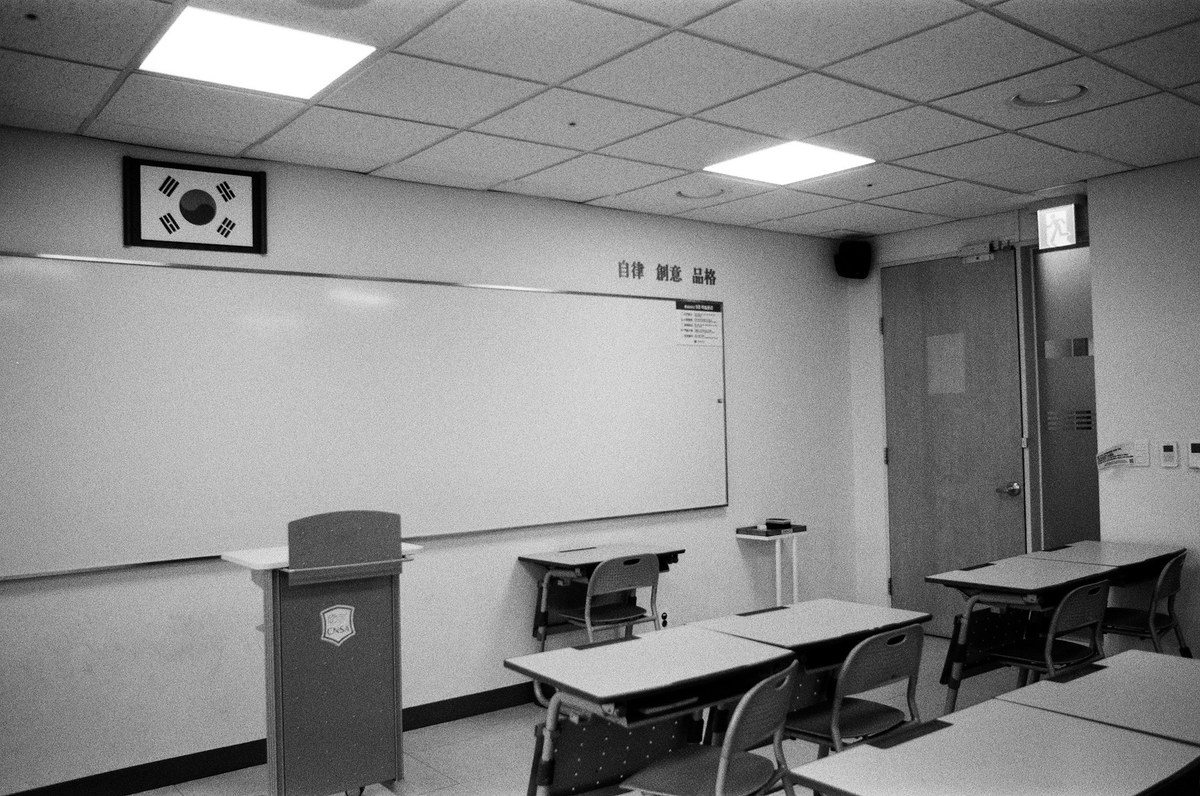 A small neighborhood academy, about like this one.
Something about teaching struck me as genuinely strange.
I prepared every lesson. I read through several textbooks and worked out which explanation would be easiest for the students to follow.
They forgot all of it anyway.
And the strange part is that I remember everything.
I remember the problem types I covered. I remember each school’s exam scope and its quirks.
I’m the one who wore my voice out explaining, and I’m the one who kept it.
The students, who got everything neatly packaged, lost it. That seemed backwards to me.
Why does it go that way? Why does the person explaining remember while the person listening forgets?
After studying some brain science, I found the reason.
Retrieval and deep encoding were behind it.
Understand those two and you can build deep knowledge, solve hard problems, and stop losing difficult material.
Today I want to walk through retrieval and deep encoding, and how they let you learn anything well.
You remember what you spit back out
Teachers remembering more than their students is a documented research finding.
Output strengthens memory more than input does.
According to a 2006 study by two scientists named Roediger and Karpicke,
active retrieval (teaching) beats passive study (sitting through a lecture) when it comes to memorizing.
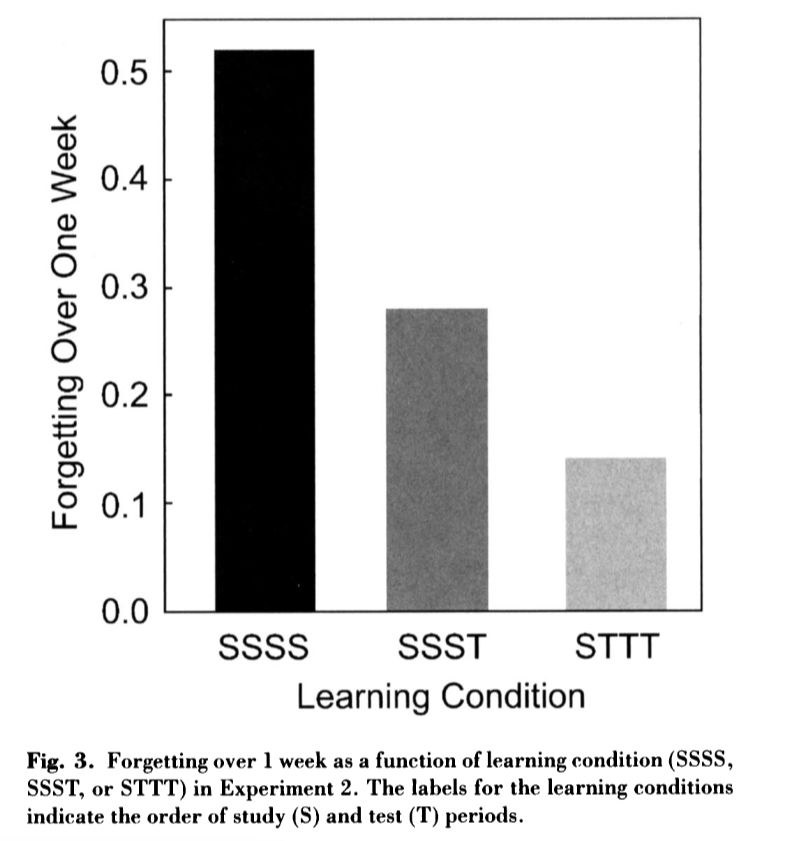
The researchers split participants into three groups, gave them the same material, and had each group study it a different way.
Read and study the material, four times through
Read and study three times, plus one practice test on what they learned
Read and study once, plus three practice tests on what they learned
Which group learned the most?
The order came out 1 < 2 < 3. Students who pulled the material back up and wrote it out scored far higher than students who read it passively.
That’s exactly where my students and I parted ways.
A teacher who has to retrieve the material and explain it is bound to learn more than students sitting comfortably and listening.
Want practical tips that make you a little smarter every week?
I cover persuasion, marketing, writing, and the other skills modern life demands.
Subscribe now and get notified when a new post goes up!
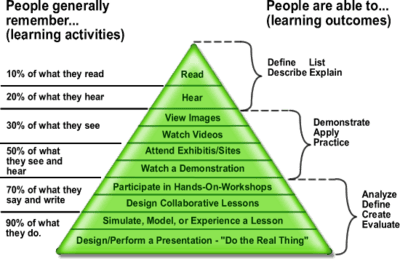
NTL, an American psychology research institute, explains the same thing with a model called the ‘learning pyramid’.
The pyramid says how much sticks ranges from 10% to 90% depending on the study method: people remember only 10% of what they read, but 70% of what they say and write.
 https://en.wikipedia.org/wiki/Learning\_pyramid
Odd to think that I remember nine times more than the students who paid tuition and got to sit through the class in comfort.
And apparently preparing the lesson helps too, not just delivering it.
Ironic, isn’t it?
Deep encoding explains why.
Deep encoding: you remember what you organize
Encoding is the process of taking the information you see and hear, 1) organizing it in your head, and 2) connecting it to what you already know.
Say you read a curry recipe and think, ‘ah, this is like making soup, except you brown the meat first and use less water.’ That thought is encoding.

You link the recipe to something you already know, how to make soup, then file it under a meaning you assigned to it: watch the water. That’s encoding.
So encoding is interpreting and organizing what you saw and heard in your own way.
Encoding also works better or worse depending on how you do it.
There’s shallow encoding, which fixes on the surface of the information, and deep encoding, which fixes on its meaning. Shallow encoding notices the shape of the cookbook, the font, the color of the text. Deep encoding notices what the recipe actually says and what’s unusual about it.
According to an experiment, deep encoding leaves twice the memory that shallow encoding does.
The researchers gave participants a list of words, asked them questions aimed either at shallow encoding (is this uppercase or lowercase) or deep encoding (what does this word mean), then asked them to recall the words. Participants who got the deep-encoding questions scored two to four times higher.
The more you reorganize the meaning and glue it to what you already know, the better you remember.
So deep encoding, which reorganizes meaning, plus retrieval, is what learning runs on. The harder and more tangled the material, the more you need to study this way.
So how do you actually practice retrieval and deep encoding?
It comes down to writing
Writing is the easy way to do both. Writing is retrieval on its own, and the effort of explaining what you learned concisely is a deep-encoding activity.
Which means paraphrasing someone else’s writing into your own words buys you very little. Learning happens when you structure the material your own way. Revising works too. Reading your own draft, checking whether the logic holds, smoothing over the thin parts, all of that restructures the meaning in your head.

Learning takes using your head. Sitting slack-jawed through an instructor’s explanation produces nothing. You have to go to the trouble of outputting and encoding. Learning only happens when you put in the annoying, exhausting work of thinking.
That you learn in proportion to how hard you think is something I covered before in the speed reading series.
Suffering doesn’t make a thing valuable, but valuable things do take suffering to get.
So how should you write in order to learn deeply?
In the next post I’ll cover the writing method that makes you smarter, the Feynman technique.
Want practical tips that make you a little smarter every week?
I cover persuasion, marketing, writing, and the other skills modern life demands.
Subscribe now and get notified when a new post goes up!
References: study on learning and retrieval, learning pyramid, People Who Change Education, column 1, column 2
You might like these too!