Here’s what the ‘story series’ covers.
How to persuade people with a story
How to build a compelling story out of emotion and narrative
These read best in order.
How a rumor nearly took down McDonald’s - 1 - what a story can do
So far we’ve been working out what a story is. To sum up: first, a story works on emotion and instinct, and it follows a simple structure that stays in memory, which makes it stronger than logic. Second, once you fall into a story, that story becomes reality for you. So a story you fall into changes what a person sees and does.
This is the last post in the story series.
Today I want to cover the two traps you have to avoid when you build a story, and how to get around them.
Miss those two and your story won’t move the reader at all.
Getting through to people is hard to begin with
Have you ever taught anyone?
I tutored privately and taught at a cram school, and it was genuinely hard. The teaching itself wasn’t the hard part. Managing the kids was. Tell them to do the homework and they don’t, tell them to stop sleeping and they sleep.

I learned from that people don’t listen to other people. That’s the default.
Changing someone else is hard by nature.
Why is that?
Two reasons, fatigue and skepticism.
Change a person’s worldview and you can change their behavior. But worldviews don’t change easily. People resist new ideas. And they resist with fatigue and skepticism.

1) Fatigue is the “can’t be bothered” feeling.
There are far too many things in the world competing for our attention. Open your phone and Instagram, TikTok, KakaoTalk, Reels, Shorts, and YouTube pour out.

Step outside and screens, billboards, flyers, broadcast ads, and shop signs are all straining to catch your eye. The whole world is working to get our attention.
But if we paid attention to all of it we’d overload. Picking a snack at a convenience store would mean looking at every snack and judging each one. Impossible.
So we ignore 99% of what we run into. It’s tiring otherwise.
Which means that to persuade someone, you first have to get their attention.
The same principle applies to writing.
How to make any piece of writing fun - engine 1: write like you’re driving
2) Skepticism is the “really?” reflex.
We have an instinct for spotting cheats, so when someone pushes an idea on us we get more guarded. That’s why we dislike liars, get angry about undisclosed ads, and avoid people who try to convert us.
The book Made to Stick says this:
If you charge straight at your audience,
they will fight back
Like action and reaction, push anything on a person and they refuse by instinct.
Young children have no skepticism yet, so they believe what they see. That’s why they follow a stranger they met on the street and fall for a scam that’s obvious to everyone else. Adults don’t believe everything they see.
So fatigue and skepticism are feelings that protect us, and at the same time they’re the obstacles standing in front of our story.
But a story can use emotion and narrative to slip past both of them naturally.

Designing a story people talk themselves into
Goebbels, who ran Hitler’s propaganda, said this.
Propaganda loses its power the moment the public becomes aware of it.
When the message doesn’t show, a story gets around skepticism. We come away thinking we reached the conclusion ourselves. So what if you tell someone a story built so that only one conclusion is possible?
Edward Bernays, the founder of PR, who I introduced in the previous post, designed a story that pushed bacon sales up.

Bernays got a piece into the papers saying that physicians recommend a hearty breakfast. Next to it he ran another piece saying that bacon and eggs make a good breakfast.
Anyone who read both came away thinking bacon equals a hearty breakfast. Because they drew the conclusion themselves, they went looking for bacon without questioning it.
That’s how you route around skepticism. Those TV health shows and supplement ads that caused a stir recently worked the same way. A blunt ad bragging about a product’s benefits invites criticism and doubt. A fun, natural story can plant the idea instead.
I’ve said something similar in an earlier post.
How to make any piece of writing fun - engine 1: write like you’re driving
So let’s look at how to put emotion and narrative into a story you design.
2) Frightening, surprising, fantastical stories
The strongest emotions are fear, fantasy, and surprise. Put those three into a story and it grabs attention and slips past doubt.
We judge everything as good or bad.
Almost everything sits somewhere between very good and very bad, which makes it ordinary.
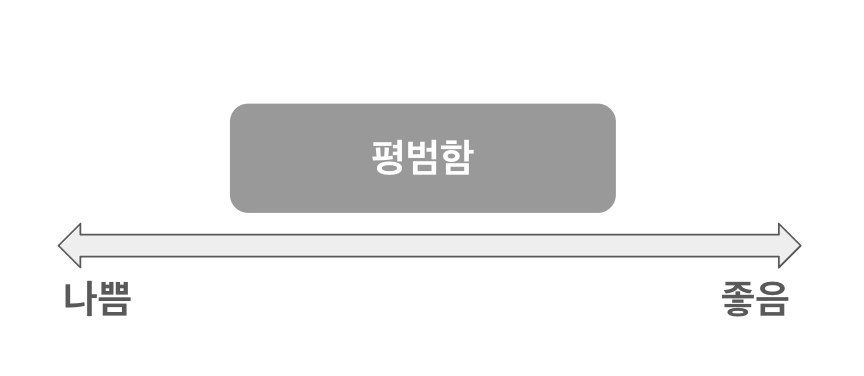
Ordinary things don’t pull attention. Very good and very bad things do. The frightening and the fantastical.
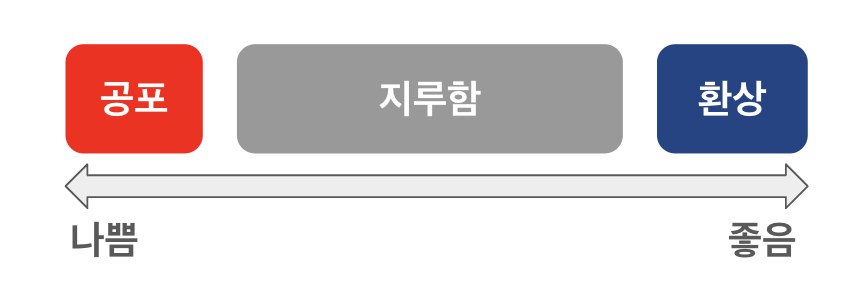
A frightening story deals with something cruel or dangerous. A story about a serious danger pulls attention. When there’s a car crash, people gather. They want to look at the scene even though looking makes them feel worse. Horror movies work the same way. Because of the survival instinct, we lock onto fear and danger. People fall for phone scams for the same reason, because they get scared. An ordinary scam wouldn’t get a proper hearing, but the moment you hear your own child’s voice as a hostage, you can’t judge the situation coldly.
Fantastical stories deal with desire. A story about how to get the things we instinctively want, money, relationships, power, pulls attention.
Do you know those “frequency that makes you prettier” videos? There’s no medical basis for them, and people fall into them anyway.
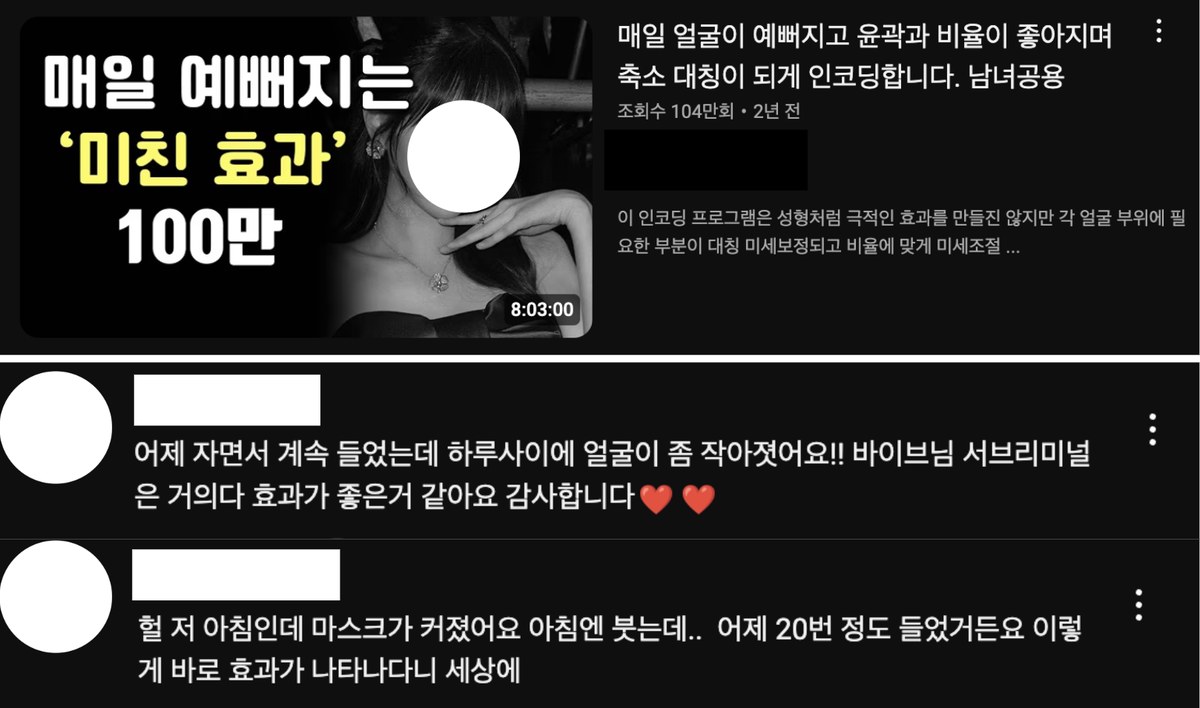 These people only wanted to be beautiful.
It’s remarkable. Offer people what they badly want and they believe it without questioning. Pyramid schemes and frauds work the same instinct by promising absurd returns. I covered this in the principles of persuasion too.
Smart people get scammed for the same reason, they get pulled along by emotion, and I’ll cover that later in the decision-making series.
Last, the “surprising” is uncertainty that could turn out good or bad. We want that uncertainty resolved right away. That’s the pull of a surprise. A surprising story also breaks our expectations hard and triggers dopamine. So we like shocking stories and strange ones.
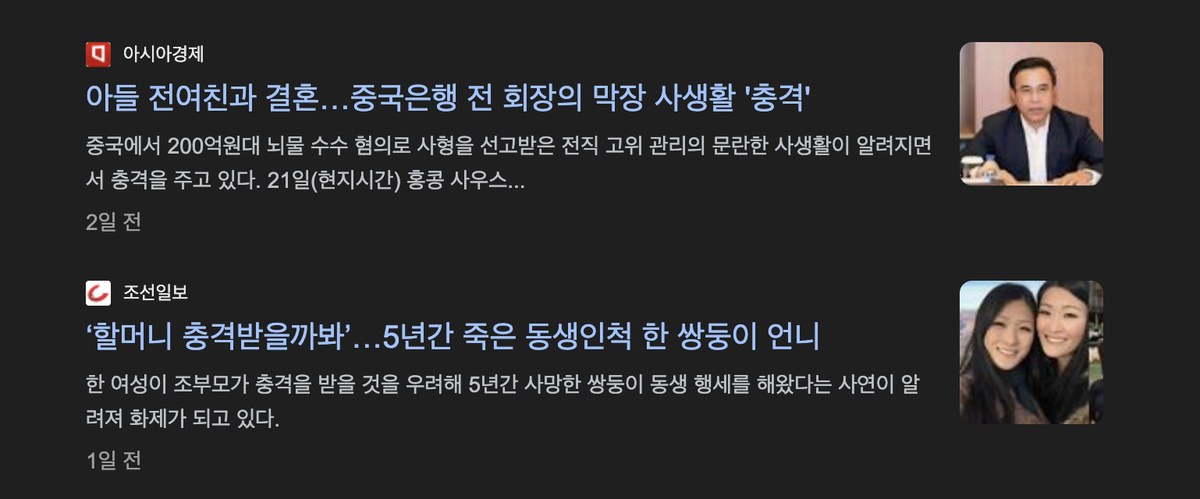 Articles like this get a lot of views.
As Claude Shannon, who founded information theory, put it, “information is surprise.” Surprising and shocking things carry more information, which makes them more attractive.
So surprising, frightening, and fantastical stories put our skepticism on pause.
Do you know about the flat earth theory?
It’s the conspiracy theory that the earth is really flat and NASA is hiding it.

Apparently 1 to 2% of Americans believe the earth is genuinely flat.
Surprising, isn’t it?
It’s so far-fetched that people can’t judge it at all. Then the conspiracy gets stacked on top, that NASA and the world’s governments are hiding the flat earth. Now it works on fear and fantasy as well, so people fall in deeper. A conspiracy theory that catches on always has something the others don’t.
You can apply the principle behind these three emotions in plenty of places.
Emotion concentrates attention and pauses criticism, so you can use it when you set out to persuade.
How to persuade in one sentence - a summary of The One Sentence Persuasion Course, part 1
You can use it in titles too.
Three secrets of a title you can’t scroll past - writing titles that pull a million views
The other thing that makes a story compelling is its narrative.
3) The four narratives of a story you fall into
According to the book Erzählende Affen, interesting stories follow similar narratives.
-
Cooperation: moving stories where people help each other (rescue, sacrifice)
-
Change: stories where someone weak or young grows and becomes strong (transformation, growth)
-
Victory: stories about overcoming hardship or winning a contest (competition, revenge, the comeback)
-
Taking: stories about finding what you were after or hunting it down and getting it (the hunt, the quest)
All of these deal with values that matter a great deal in human society. As I explained in the first post, we like information that helps us survive, which is what makes these narratives interesting. It connects to the nine moral emotions I covered a while back.
To sum up, use narrative and emotion and you can pull attention and create absorption.
Seen this way, Harry Potter isn’t simply a story about magic.
Harry, raised an orphan, grows into the strongest wizard in the world, fights in cooperation with his friends, beats the villain who killed his parents, and takes the Deathly Hallows and peace for the world.

There’s the fantasy of a wizarding world where people fly on broomsticks, the fear of a Voldemort so strong nobody can say his name, and the shock of learning what Snape really felt or what Harry could really do.
That’s why Harry Potter moves us. That’s why we don’t sit there objecting that it’s fiction. We tense up when Harry is in danger and we’re happy when Harry wins. We’re completely absorbed.
A story is magic
Beyond Harry Potter, every great story is packed with these emotions and patterns, the Avengers, Romance of the Three Kingdoms, Star Wars. Designers like Edward Bernays put emotion and narrative into stories and got people eating bacon every morning, got women smoking, and toppled the government of Guatemala.
Bernays didn’t have some special ability. The power is in the story.
The ability to build a story is marketing and storytelling and PR and propaganda, and it’s one of the oldest powers humans have. It’s also the most effective way to move the world.
A story carrying emotion and pattern changes reality.
Now you can use that power too.
The most powerful person in the world is the storyteller.
The storyteller sets the vision, values, and agenda of the entire generation that is to come.
- Steve Jobs
Want practical tips that make you a little smarter every week?
I cover persuasion, marketing, writing, and the other skills modern life demands.
Subscribe now and get notified when a new post goes up!
Books I mainly drew on: Erzählende Affen, Propaganda, 끌리는 문장은 따로 있다, The Power of Surprise, Made to Stick
You might like these too!