Here’s what the ‘story series’ covers.
How to persuade people with a story
How to find the core of a story
How to build a good story
These read best in order.
How a rumor nearly took down McDonald’s - 1 - what a story can do
Stories and propaganda
People have been leading others with stories for a long time. Stirring up emotion and shaping opinion with a story is what we usually call propaganda.
Propaganda might bring some terrifying dictatorship to mind, but marketing, PR, and public information are all forms of propaganda.
Let me give one example.
Do you know this man? This is Edward Bernays, Sigmund Freud’s nephew.
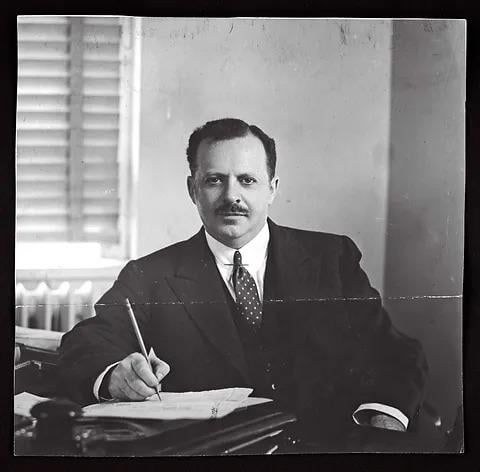 Edward Bernays
This ordinary-looking man was a master of stories and a doctor of agitation. Women smoking, bacon at breakfast, the overthrow of the Guatemalan government, he was behind all of it. Hitler and Goebbels are said to have enjoyed his books.
In his book Crystallizing Public Opinion he wrote this:
Remember that appealing to instinct and universal desire
is the basis of producing the result you want
It means you can move the world with a story that appeals to instinct and universal desire.
Is that really so?
How did Bernays change what people ate for breakfast and topple a government, with stories?
To know how, you have to understand the mechanism by which a story changes behavior.
 How does a story change what we do?
You can change what people do with a story?
Yes, you can.
To see how, you have to start with how we understand the world.
1) We look at the world through a worldview.
We don’t take the world in as it is. The book Erzählende Affen says this:
People act on the basis of the story they build for themselves, not on what they first experienced. That means information is turned into a story before it reaches our consciousness. Put another way, everything we think is our reading of the story built around the information. (p. 122)
In plain terms, you could call it a frame. The world is far too complicated, so we look at it through a frame. Two people look at the same glass, and one says there’s still half of it left while the other says there’s only half left. They were looking through different frames.

Through a frame we make sense of reality and sort the true from the false. So to understand a person, you have to start with their frame.
So why does the frame matter?
2) People act according to their worldview.
We understand the world through a worldview. And we act on that understanding. You may think you judged freely, for good reasons of your own, but those reasons come out of the worldview. So the reason a person did something has to be read through their worldview, not through free will.

Ray Dalio says this in his book Principles.
One of the most important decisions you can make
is who you ask questions of.
 Ray Dalio
When we ask someone a question, we end up following their opinion. So the moment you decide who to ask, the answer you’ll get and the action you’ll take are already more or less set. In the same way, the moment your worldview is set, so are the decisions you’ll make and the life you’ll live.
Stories work like that too. The most important decision in a life is choosing which story to believe.
Want practical tips that make you a little smarter every week?
I cover persuasion, marketing, writing, and the other skills modern life demands.
Subscribe now and get notified when a new post goes up!
Here’s a good example, a study run on university students in Canada. Eighty five students with low grades who were struggling to adjust to university life were asked to write about their own lives and look back on them.
The results were startling.

The students who wrote about their lives and their goals saw their grades climb sharply, and the dropout rate fell to 0%. Just looking back on their own lives shifted their worldview, and having found a purpose they started living harder.
Change the worldview and behavior really does change.
So where does a worldview come from?
3) A worldview comes from experience.
A worldview is what you get after interpreting the experiences you go through. Say you dieted hard and the weight didn’t come off. You can read that experience in several ways. You could decide you didn’t try hard enough, or that you’re hopeless anyway, or that it’s someone else’s fault. A worldview is your own attempt at making sense of a complicated world.
The whole flow looks like this.
 experience -> worldview -> values -> behavior
We make sense of experience to build a worldview, we hold values, and we act on those values.
Interesting enough, you might say, but what does any of this have to do with stories?
I said all of that to get to this question.
How do you persuade a person?
I’ll come back to this, but you can’t persuade a person the way you knead clay. The moment they feel they’re being persuaded they get defensive. You can only change someone by taking human psychology into account, the way motivational interviewing does, which I covered in the conversation series.
So how does a story change a person’s mind?
A story you fall into becomes true.
Research shows that the brain responds to the written word “apple” much the way it responds to a real apple. The brainwaves of the person telling a story and the person listening also fall into sync.

That research explains two things.
- Our brains can’t separate fiction we’re absorbed in from truth. That’s why we can lose ourselves in a movie, a drama, or a game that is plainly made up.
Which means a well-made story is indistinguishable from reality.
 We can’t separate a story we’re absorbed in from reality.
- A story connects me to other people. What I think, the other person comes to think. Through a story we can share experience, feeling, and thought.
Put those two together and the conclusion follows.
A story you fall into persuades you.
The book Erzählende Affen says this:
The transformation that narrative absorption achieves
is the persuasion of the one receiving the story. (p. 123)
A story we experience while absorbed in it is the same as reality to us.
So people are persuaded by stories.
Bernays took smoking by women, which society treated as taboo, and made it a trend with a single story. He promoted the idea that a woman smoking was breaking free of oppression. He framed the cigarette as a torch of freedom. Once newspapers ran photographs of attractive models marching while smoking, the cigarette became a symbol of freedom and release, and an object of desire.
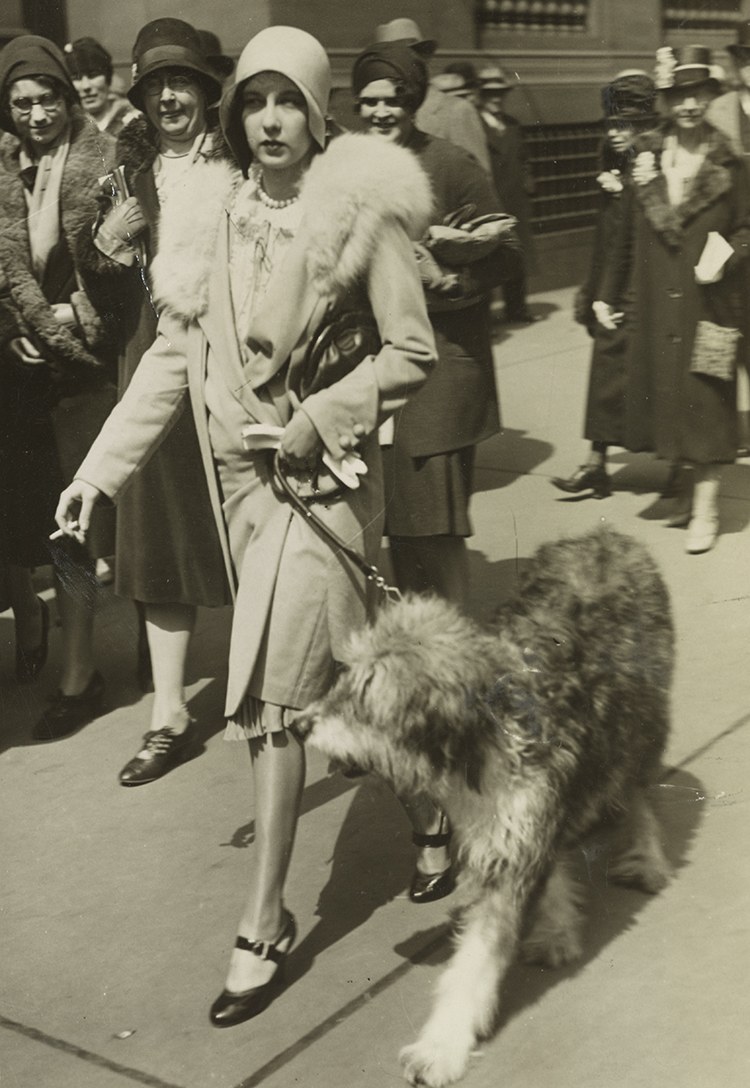 ‘Torches for Freedom’ march, New York, 1929.
Could Bernays have done any of that with logic instead of stories?
Logic solves math problems, but persuading people takes a story.
The foolish speak,
the wise tell stories.
-Ben Jonson
The stories that succeed are different.
Not every story catches attention, though. Not every story changes what people think. So how do you use stories as freely as Edward Bernays did?
A story that succeeds touches three emotions.
What those three emotions are, and how you touch them, I’ll explain next week.
Subscribe and I’ll send you a notice.
Want practical tips that make you a little smarter every week?
I cover persuasion, marketing, writing, and the other skills modern life demands.
Subscribe now and get notified when a new post goes up!
Books I mainly drew on: Story Genius, Erzählende Affen, Propaganda, Crystallizing Public Opinion
Paper referenced: the effect of reflective writing on academic performance
You might like these too!