Here’s what the story series covers.
How to persuade people with a story
How to find the core of a story
How to build a good story
These read best in order.
How a rumor nearly took down McDonald’s - 1 - what a story can do
As we saw last time, stories help us survive, and that’s why we like them.
Today I want to look at what a story actually is and how it works.
1) A story is the toolbox inside your head.
You drive a nail with a hammer, tighten a bolt with a wrench, cut wood with a saw. Tools let you solve problems.

If a wrench is a physical tool, the intellectual one is a story. A story takes the form of someone did this in that situation and it went well, or badly, and that helps us handle a range of situations. The tool-shaped stories that help us out are the ones that stick in memory.
So the stories you remember follow the form “who did what, in what situation, and how it turned out.”
Went to the sea at Gangneung in summer and it was great, or bought something off Temu and it was junk. We hear stories like that and learn, ah, I should go to Gangneung, I shouldn’t buy from Temu. Not every story shows its lesson that plainly. As I covered in the last post, the learning also happens unconsciously.
2) The message of a story is “here’s how it went when I tried it.”
Every story follows one of two patterns.
- Someone did something and it turned out well.
- Someone did something and it turned out badly.
Myths and hero tales have a common shape too. A hero falls into trouble, gets help, and rises above the ordeal. The American scholar of religion Joseph Campbell laid the hero myth out in twelve stages.
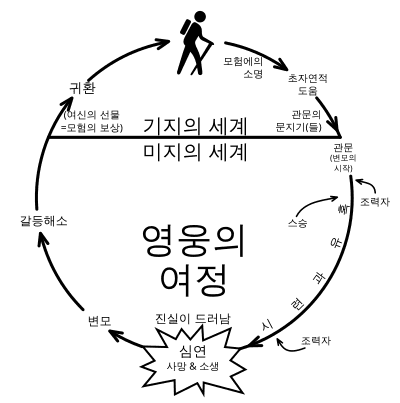 The hero’s journey, source: Wikipedia
Twelve stages for a hero tale looks complicated. But the core is that the protagonist acted heroically and got a good result, meaning the problem was solved. The mentor, the ordeal, the helpers, the transformation, all the devices in the hero’s journey are there to make the problem solving stand out.
This never leaves the form of “the hero overcame the ordeal this way and got that reward” either. Pieces of the hero structure like the helper, the trials, and death and rebirth are devices that press on that same form.
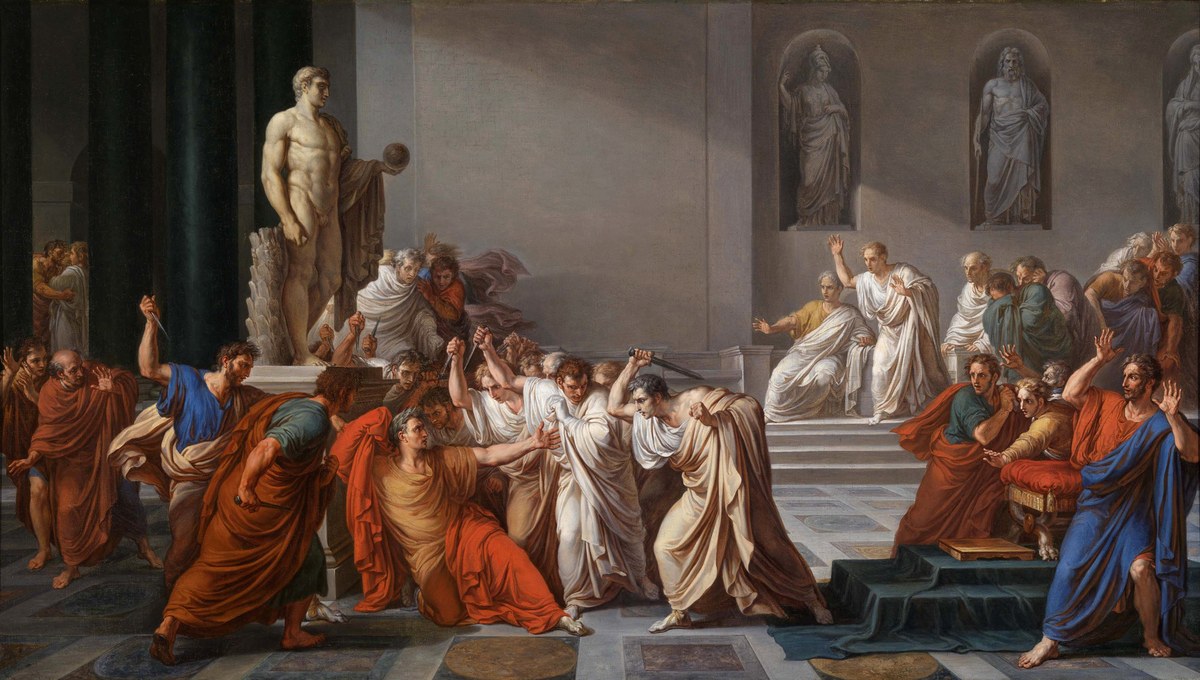 Caesar’s story teaches that if you look dangerous, people move against you.
Lisa Cron, in her book Story Genius, says a story is made of four stages.
A false belief -> finding the truth -> realization -> change and the problem solved
The core of that pattern is again “they did this and the problem got solved.” The false belief is a device that makes finding the truth stand out. Hardship and adversity do the same job. The protagonist has to be in trouble before the heroic act and its result can stand out.
As I’ve said since my very first post, the four-part structure Koreans call ki-seung-jeon-gyeol (setup, development, turn, resolution) works the same way.
Writing is either explanation or experience - do these two well and writing stops hurting
The setup and the development lay the story out, and the turn changes its direction. But setup, development, and turn are all supporting cast. The resolution, where the trouble gets settled, is the core. The other three exist to give the resolution its impact. And the core of the resolution is a case of problem solving: someone did this and the problem got solved.
Twelve stages, a seventeen-stage hero narrative, ki-seung-jeon-gyeol, the format doesn’t matter. The core of every story is a problem-solving strategy. “Someone did this, the problem got solved, and it was good” is comedy. “Someone did this, the problem got worse, and it all fell apart” is tragedy. Every other formal element is a device that makes this stand out. So however cleanly a story follows a format like the twelve or seventeen stages, it will never resonate unless it works through an important problem in life.
3) Only the stories that leave a mark survive.
The important problems in life don’t change across eras or countries. Love, power, money, trust, justice, the values that matter most in our lives stay the same. The material of a story changes, the subject doesn’t. A story that handles one of those problems resonates.
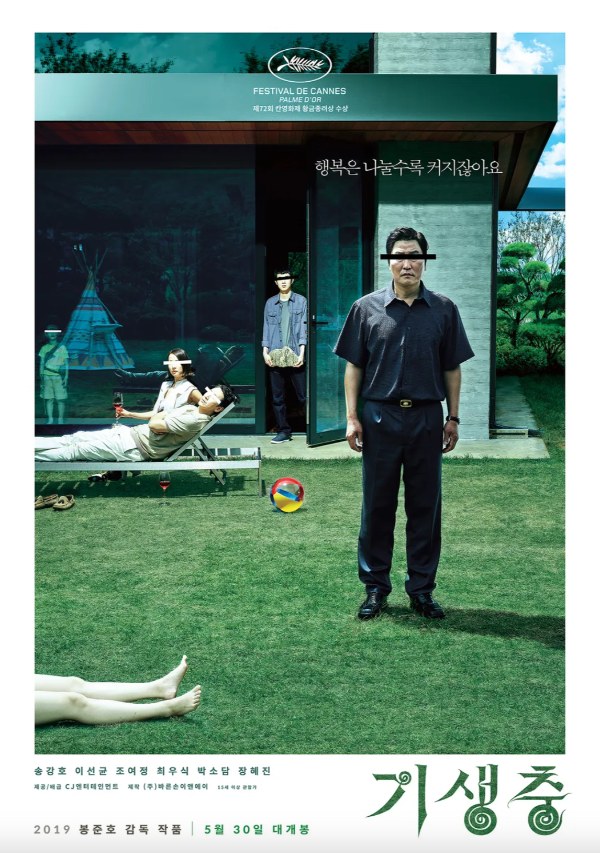 The plot of Parasite is fresh, but its subjects, family, the gap between rich and poor, and crime, have been in use forever.
We watch stories and learn. The more stories you know, the better the choices you can make, and that’s why we like stories. The more important the problem a story deals with, the more we like it. That’s why the great ones outlast their era.
Just as only the organisms that survive get to reproduce, only good stories survive to be passed on. Stories that help you survive, stories that are interesting and surprising, those are the ones that last. If a story leaves you thinking “ah, so that’s how it’s done” or “so that’s what not to do,” even unconsciously, that feeling is the story’s payload and its nutrition. Stories like that answer two questions.
- What kind of place the world is
- And therefore, how we should live
Those two are the most important problems in a life, and we always want the answers.
In the end every problem in life comes down to one: how should I live?
Stories exist to solve that problem.

We learn from stories how we’re supposed to live.
Which also means that if we design a story, we can move people in the direction we want.
Stories and propaganda
Persuading people with stories is nothing new. We usually call it propaganda.
Propaganda might bring dictatorships to mind, but marketing, PR, and public information are all forms of propaganda.
Let me give one example.
Do you know this man? This is Edward Bernays, Sigmund Freud’s nephew.
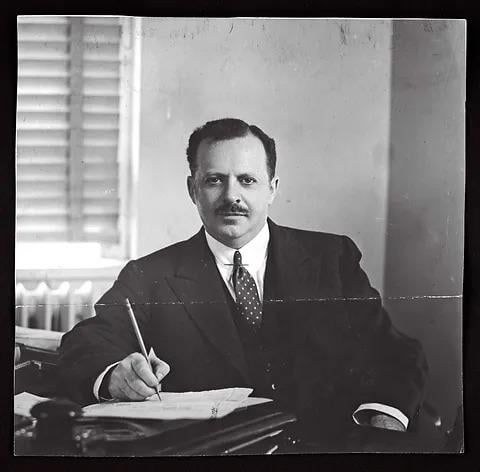 Edward Bernays
This ordinary-looking man was a master of stories and a doctor of agitation. Women smoking, bacon at breakfast, the overthrow of the Guatemalan government, he was behind all of it. Hitler and Goebbels are said to have enjoyed his books.
In his book Crystallizing Public Opinion he wrote this:
Remember that appealing to instinct and universal desire is the basis of producing the result you want
It means you can move the world with a story that appeals to instinct and universal desire.
Is that really so?
How did Bernays change what people ate for breakfast and topple a government, with stories?
I’ll tell you in the next post.
Read the next post!
Why stories beat logic - 3 - the foolish speak, the wise tell stories
Want practical tips that make you a little smarter every week?
I cover persuasion, marketing, writing, and the other skills modern life demands.
Subscribe now and get notified when a new post goes up!
Books I mainly drew on: Story Genius, Erzählende Affen, Propaganda, Crystallizing Public Opinion
You might like these too!