Have you ever failed to cut your losses on a stock?
You swore you’d dump it at your stop-loss price, then you couldn’t, and you sat there agonizing while the loss got bigger. Sound familiar?
Even outside of stocks, have you ever felt bad because you couldn’t act on a plan you’d committed to?
It’s fine.
Cutting losses is hard because of the way people are built. There’s a paper about it. Let’s read it together today. It’s my favorite behavioral economics paper, and it explains why we can’t cut a stock loose the way we planned to.
The paper is called Behavioral problems of adhering to a decision policy, and you can read it here.
It’s an academic paper, so it isn’t the easiest read, but I’ll walk you through it. Stick with me.
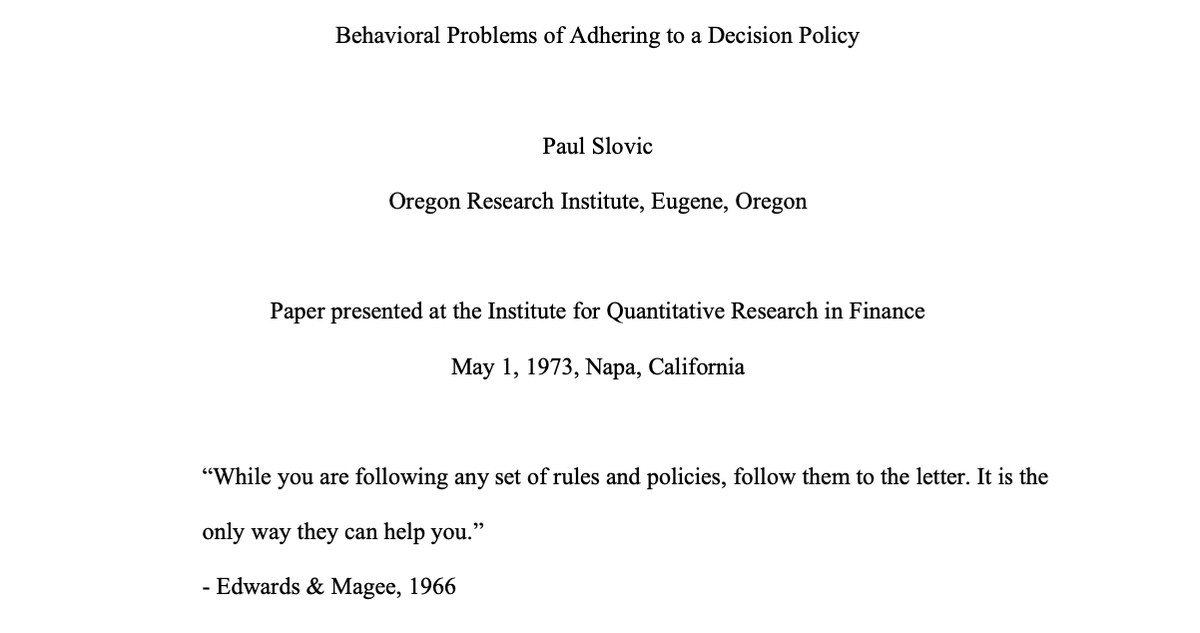 This is what the paper looks like.
Do you remember the horse racing handicapper experiment I wrote about a while back?
Why studying more makes you dumber - decision-making series 1: is more information always better?
It ran with eight professional handicappers, to find out whether the amount of information helps a decision.

The handicappers got five pieces of information about each horse (past results, times, weight, and so on) and predicted the outcome of the race. Then the researchers raised it to 10 pieces, 20, and 40, and had them predict again with more to work from.
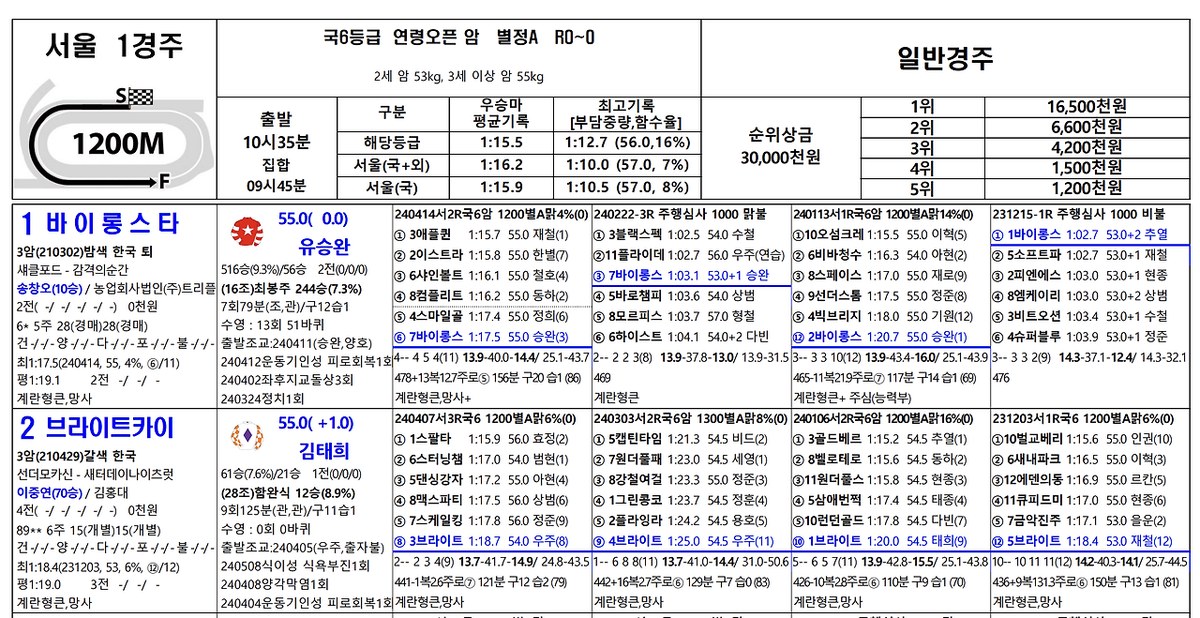 Today’s Races, a booklet with times, weights, and other analysis of the horses running (Korea Racing Authority, Today’s Races)
Were the handicappers more accurate once they used more information?
Was 40 pieces better than five?
Surprisingly, accuracy did not go up.
At five pieces, at 10, at 20, at 40, accuracy sat at about 16% the whole way.
More information, and accuracy didn’t rise a bit.
The really strange part is what happened to their confidence.
The more information they had, the more certain they got about their own predictions.
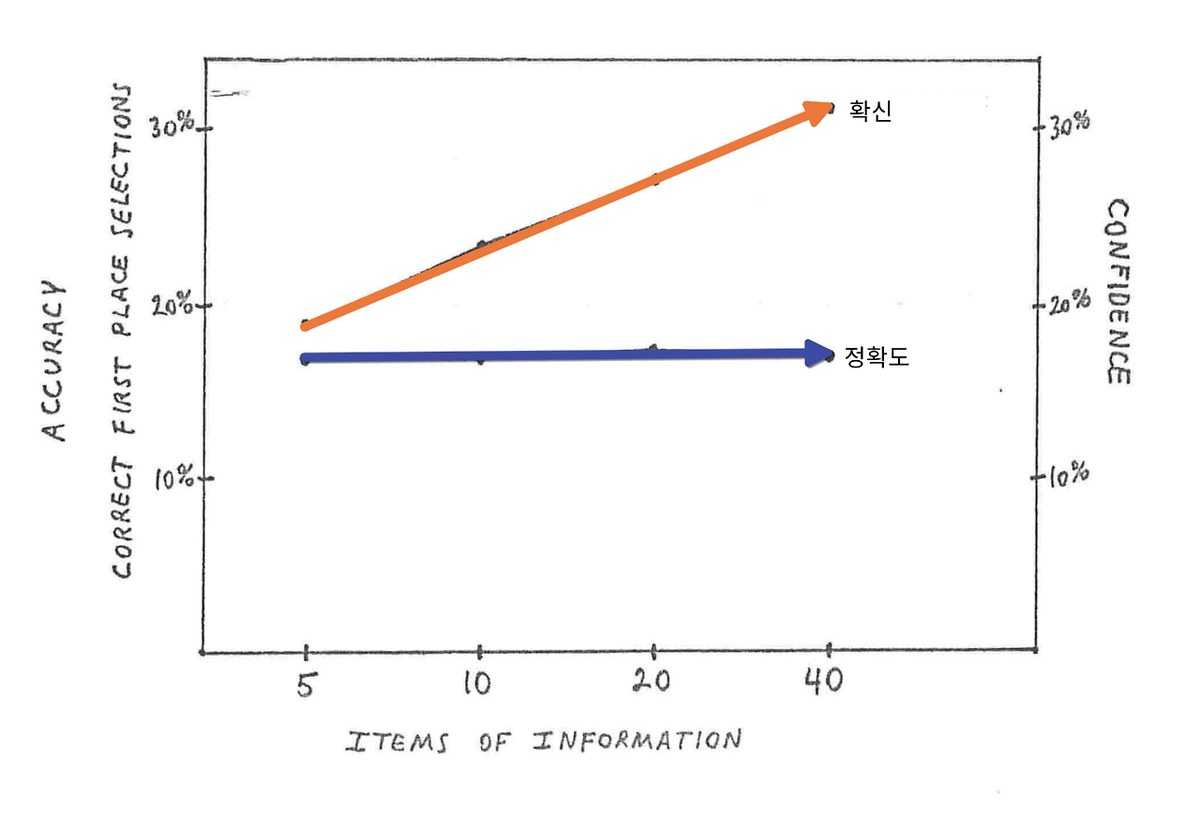
Accuracy didn’t move at all, but their certainty that they were right went up by more than 50%.
The conclusion: more information doesn’t raise your accuracy, it raises your confidence.
There’s a gap between the skill we think we have and the skill we actually have. And this overconfidence problem gets worse as we pile on information that doesn’t mean much, like a horse’s past results.
That’s why we should be suspicious of the feeling of getting smarter. A fine example of the Dunning-Kruger effect.
Want practical tips that make you a little smarter every week?
I cover persuasion, marketing, writing, and the other skills modern life demands.
Subscribe now and get notified when a new post goes up!
This paper is where that handicapper experiment comes from. And it holds several more experiments about as interesting. One of them is the gambling preference experiment.
Given a set of gambles with different odds and different payouts, people said the gamble with the best odds (the highest expected value) was the most attractive. So when they gambled for real, did they put their money on the one with the best odds?
No. What people did didn’t match what they said. They bet the most on the gamble with the biggest payout. After saying the odds mattered most.
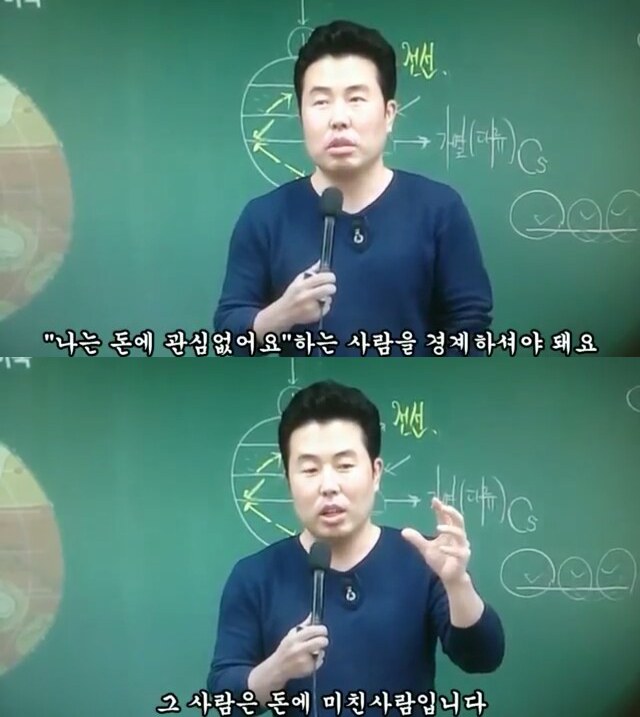 Don’t believe people will act the way they say they will. Source: a lecture by geography instructor Lee Gi-sang
Don’t believe people will act the way they say they will. Not because they’re lying, but because their judgment genuinely differs between talking and doing.
An experiment at the Four Queens casino in Las Vegas shows the same thing. People had to pick one of two gambles. The odds went like this.
Gamble A:
- 11/12 chance of winning 12 chips
- 1/12 chance of winning 24 chips
Gamble B
- 2/12 chance of winning 79 chips
- 10/12 chance of losing 5 chips
Gamble A has good odds. Gamble B has bad odds but a small chance at real money.
Both have their appeal. Asked which one they’d play if they had to pick, the subjects split about evenly.
But when they actually put money on the two gambles, they did something other than what they’d said. 87% of the people who picked gamble A bet more on gamble B.

Why? Looking at how the participants behaved, the paper says we use one standard when we build a strategy and another when we act on it. Analyzing, they judged by the odds. Handing over money, they judged by the size of the payout. The paper runs a few more experiments along these lines, but I think that’s enough to make the point.
To sum up: our analysis and our behavior contradict each other, and we don’t notice.
Build a strategy and you still won’t act on it. The paper says following your own strategy faithfully takes a fairly skilled sort of thinking. The problem isn’t building the strategy. It’s that you build one and then don’t keep it.
But maybe improvising in the moment beats having a strategy? Human intuition, animal instinct, the animal spirits Keynes talked about. Decisions made that way could work better than a plan.
Sadly, it doesn’t look that way. Judgments made on the spot get pushed around by trivial, unrelated outside conditions.
You could call human judgment inconsistent. A good example from the paper: radiologists change their reading of the same X-ray 20% of the time when they look at it again.

People also make riskier decisions in a group than alone, and take on more risk when things feel like they’re going badly, such as when they’re losing money. A real decision might have any number of factors worth weighing. But we get moved by the irrelevant ones and by our own state of mind. The conclusion is clear. We sway like reeds in the wind.

This is also why we can’t cut a falling stock loose. We set a strategy, a stop-loss price, and then the moment comes and we don’t want to follow it. It isn’t just you. People are bad at following strategies.
So how do we shore up our shaky judgment? The paper doesn’t say, but I read through the well-known books on decision-making and worked it into three steps.
Step 1: build the strategy. Step 2: decide the intent. Step 3: spell out the assumptions and exceptions.
I’ll go through each one in the next post.
Subscribe and I’ll let you know when it’s up.
Want practical tips that make you a little smarter every week?
I cover persuasion, marketing, writing, and the other skills modern life demands.
Subscribe now and get notified when a new post goes up!
References:
- Slovic, P. (1973). Behavioral problems of adhering to a decision policy.
You might like these too!
How to persuade in one sentence - The One Sentence Persuasion Course summary 1
I found the best brain science book - 1 - a review of Brain View (1)
What if you read ten times faster? - reading series 1: how to read a book well