Here are the speed reading methods science backs, and how to avoid the ones that don’t work.
The reading series collects what Prody puzzles over and works out, in a life that is mostly eating, reading books, and writing on Brunch.
If you read books ten times faster, if you got ten times smarter than everyone else,
what kind of life could you have?
Over the last two weeks we looked at why we read, and how we should read.
What if you read ten times faster? - reading series 1: how to read well
The reading method that never fails - reading series 2: how a pragmatist reads
Now it really is time to learn the speed reading.
So is speed reading possible?
The 700,000 won courses out there promise to make you read several times faster.
And every so often on TV you see kids practicing speed reading, riffling through the pages.
 A speed reading contest in China. Source: https://www.youtube.com/watch?v=1kK5gC0t-bU
Does it work, though? Are those kids actually learning anything?
Looking for objective evidence, I went and read the research on speed reading.
Here are the papers I used. (They’re listed again at the end.)
So Much to Read, So Little Time: How Do We Read, and Can Speed Reading Help?
Does speed-reading training work, and if so, why?
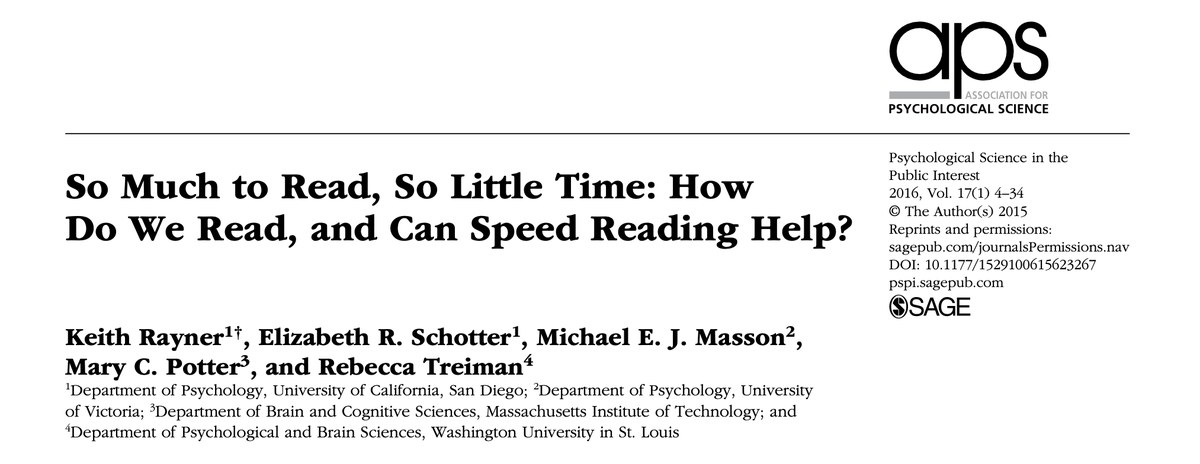 I read far more than this, but these were the only two with any nutrition in them
Here’s what it came to.
-
Speed reading sacrifices a lot of accuracy.
-
Reading speed comes down to language processing and eye movement.
-
But there are a few techniques that do work.
That’s all of it. From here I’ll go through why the techniques sold as speed reading are pointless, which ones are the exceptions that work, and how to read faster over the long run.
Half-baked speed reading
Speed reading courses and books usually make three claims.
Read fast without thinking about it and you’ll get faster.
Don’t subvocalize (subvocalizing: reading the words aloud inside your head)
Don’t regress (regression: going back to reread text you just read)
All three have been scientifically shown to mean very little. Let’s take them one at a time.
1. Reading fast for its own sake just hurts your eyes.
This is the standard line in speed reading books. Move your eyes fast, the argument goes, and your brain adapts and gets faster and faster. Sure, some people who were reading slowly will read faster. But anyone trying to learn speed reading is already reading as fast as they can. And forcing yourself faster has a side effect. You stop understanding. People who speed read lose comprehension in proportion to the speed they gain.
Experiment after experiment says the same thing. “Speed reading trades accuracy of understanding for speed.” I explained why that’s a problem in the last post. Read all you like, but if you can’t understand it and solve a problem in your own life, it’s wasted time and wasted energy.
 Speed reading trades accuracy of understanding for speed.
Reading fast for its own sake does not improve comprehension. It’s nonsense. It’s the same logic as cutting your sleep gradually until your brain adapts and three hours a night is enough. What actually happens? You get dementia and die early. You have to accept the limits of a body.
2. Subvocalizing helps.
Some people say you’ll read faster if you stop subvocalizing. (Subvocalizing is saying the words aloud in your head as you read.) People read about twice as fast as they speak or listen. So a lot of speed reading material drills you on not subvocalizing.
That’s half wrong. Subvocalizing helps you understand difficult text. Easy text you can read fast without it and still understand it fine, but with hard text subvocalizing helps. As I explained last post, reading fast without understanding is just wasted time.
3. Regression helps too.
Regression, going back to reread what you just read, gets called a bad habit. Practice enough, they say, and you’ll read faster without doing it. Is that true? Again, only for text that’s easy and simple in its sentences.
But when you have to read something hard and complicated fast, not regressing makes reading harder, not easier. That goes especially for text with complicated sentence structure. Some sentences only reveal their structure once you reach the end. Sentences where the subject sits at the back, or where modifying clauses stack on top of each other. In cases like that, the research says regressing is what lets you understand the sentence easily.

Some people apparently regress even on easy text or text they already understood, and in those rare cases the drill could help.
For the same reason, rapid serial visual presentation (RSVP), which flashes one word at a time on a screen, doesn’t do much either. It also has the problem that you can’t go back when a sentence is vague or ambiguous. Read faster than usual using RSVP and, again, you neither understand nor remember it well.
There’s no cheat code for reading.
The research says that reading fast makes you miss the content. It particularly makes it harder to connect ideas scattered across different parts of a text. Which means it gets in the way of deep understanding. If you sped through a good book, you may have read it too shallowly, too carelessly.
Most of the text that matters in your life is dense, difficult text. Textbooks, papers, reports, all high in information density. And the research says speed reading costs you the most comprehension exactly on the difficult material. Forcing yourself faster doesn’t make your brain adapt either. To sum up, none of the papers I reviewed found much of an effect from speed reading techniques.
Not every method is useless, though.
Some of them did work to a degree. Shall we look?
Enjoying this?
Want practical tips that make you a little smarter every week?
I cover persuasion, marketing, writing, and the other skills modern life demands.
Subscribe now and get notified when a new post goes up!
Can you read faster?
Fair warning: the speed reading I’m about to give you works, but it isn’t a way to get five or ten times faster.
For an ordinary person I’d guess something like 1 to 20% faster.
But even a 10% difference gets enormous once it compounds over years.
Improve 1% a day and after a year you’re 37 times better.
 Compounding is magic. (source: https://www.linkedin.com/pulse/power-1-harsh-verma/ )
Which is why I want to give you these.
I’ve got three methods.
1. Read with awareness
Even the paper that concluded speed reading is pointless says reading with awareness helps a little. It means two things exactly. 1) Pay attention to whether you’re reading well and you’ll read faster. 2) Stay aware of the flow of the text, its topic, and the information you’re after, and you’ll read more efficiently. Both raise speed while keeping accuracy. It also amounts to telling you to read with your full attention.

2. Skim the easy parts, slow down on the hard ones
Speed reading comes down to balancing speed against accuracy. Easy or familiar text doesn’t need reading accurately. You can skim it and still understand enough. Slow down only where the text gets hard. With a book in a field you know, about half of it is stuff you already know, so this alone gets you 30% faster.
3. Point at the words with your finger
Most of your reading time is the time it takes to understand the words that reached your eyes. So what happens before you understand them? First your eyes move and focus on a word. Then you recognize the word and understand the text. In that process, you can save the time spent focusing on the word.
Your eyes don’t always land on the word you need in one go. The way we grope for a light switch in a dark room, your eyes focus somewhere near where the word probably is and then fumble around for it. Finishing one line and finding the first word of the next wastes a lot of time in particular.
This one is easy to fix. Point at the line you’re reading with a finger or a chopstick.

Simple, right?
Eyes move far better tracking a moving object than reading letters that sit still. So just pointing at the word or the line you’re reading makes the text run much more smoothly.
But if you’re greedy and curious like me, a question comes up. If most of reading time is the time spent understanding and processing language, can’t we build up the language processing itself?
Let’s take on the last problem of the reading series: language processing.
Building the reading muscle
How do you build language processing? I recommend three things.
Ask questions, read a lot, summarize
Too simple, after all that buildup?
I looked through countless methods and there was no shortcut.
Honestly reading a lot and summarizing is the surest way there is.
Each has its own advantage.
First, a question makes you focus.
You read with attention only when you’re interested. So read books you like. But life hands you a pile of documents you have to read whether you like them or not. Willing yourself to be interested is hard. The easiest way to manufacture interest is a question. Questions make curiosity. I got interested in an ordinary sentence I would normally have skipped, ‘speed reading is possible’, and because of that I went digging through books and papers. The moment curiosity showed up, whether speed reading is possible became an important problem in my life. If no question comes to you, ask ‘what was the author trying to do with this?’ or ‘is the author’s claim wrong?’ and any text gets fairly interesting.
Second, the more you read, the more familiar and the faster it gets.
Texts tend to share a structure. Likewise, texts in the same field mostly overlap in content. So the more you read, the more familiar the content and the structure become, and the more easily you understand them.
A good example: professional chess players, unlike the rest of us, memorize a board position easily. They’re familiar with the few hundred strategies and game flows they’ve studied.

But show them a random arrangement of pieces that could never occur in a real game, and a professional’s memory is about the same as anyone’s. Which means a chess player’s memory rests on how familiar the arrangements are.
In the same way, the more text we meet, the more familiar we get with sentence structures, ways of developing an argument, and content. As I said above, you read slowly or reread because the content, the words, and the sentence structure feel unfamiliar. That problem is solved by reading a lot. Then text you’ve never seen reads as easily as text you know.
Third, summarizing what you read makes you aware of the content.
Practice summarizing and you learn to judge which parts of a text matter and which are peripheral enough to skim. Read the important parts with attention and take the rest fast and loose, and you digest text more efficiently. A book also builds on itself, so organizing what you read through a summary lets you understand the later parts faster. As I mentioned before, remembering what you read means putting it back out. Summarizing is the best output there is. Summarize as you read and you read fast without getting lost, and it stays in memory.

Pull all of this into a routine and you get the ‘record, summarize, connect, repeat’ method from the last post. In the end, reading deeply and solidly is the way to read fastest. I explained the ‘record, summarize, connect, repeat’ method here.
The reading method that never fails - reading series 2: how a pragmatist reads
Conclusion: we’ve learned to speed read, so shall we pick a book?
That wraps up the three-part reading series. We started with why you should read and covered the goal of reading, the technique, and speed reading. We learned record, summarize, connect, repeat as the way to read well, and reading widely and summarizing as the way to read better.
Now to actually do it!
Except… have you decided what to read?
Reading one good book 10 times clearly beats reading 10 ordinary ones, so how do you find the good book?
Dozens of new books come out every week, and busy as we are, which ones should we read?
 There is far too much to read and far too much to learn.
Which book to read isn’t a question a simple approach can answer. Reading only one publisher, or only Harvard professors, or only books with dark covers, won’t do it. (I’ve covered the simple approaches before!)
Three ways to avoid a bad book - enough with the success-peddling books!
Because the question “which book should I read” is at bottom the same as “which knowledge should I get?”
What knowledge should you learn, when finding time for a single book is already hard?
In a world changing like a storm, where AI is erasing jobs and the idea of a job for life is fading,
what knowledge would let us live best?
I found a thread in the interview records of Charlie Munger, Warren Buffett’s partner and a genius investor.
And I found the answer in three baskets, the latticework, and the story of Planck’s chauffeur.
Next post I’ll show you “how to pick knowledge worth having”.
Subscribe and get the notification!
Want practical tips that make you a little smarter every week?
I cover persuasion, marketing, writing, and the other skills modern life demands.
Subscribe now and get notified when a new post goes up!
You might like these too!
- How to persuade in one sentence - The One Sentence Persuasion Course, part 1
- I found the best brain science book - 1 - a review of Brain View (1)
- Why Ray Dalio’s Principles is hard - taking apart Ray Dalio’s Principles, part 1
Reference links
https://fortelabs.com/blog/how-to-take-smart-notes/
https://theamericanscholar.org/reading-fast-and-slow/
Papers referenced (both are worth a skim)
Rayner, K., Schotter, E. R., Masson, M. E. J., Potter, M. C., & Treiman, R. (2016). So Much to Read, So Little Time: How Do We Read, and Can Speed Reading Help? Psychological Science in the Public Interest, 17(1), 4-34. https://doi.org/10.1177/1529100615623267
Klimovich, M., Tiffin-Richards, S. P., and Richter, T. (2023) Does speed-reading training work, and if so, why? Effects of speed-reading training and metacognitive training on reading speed, comprehension and eye movements. Journal of Research in Reading, 46: 123-142. https://doi.org/10.1111/1467-9817.12417
Books referenced