Curious how smart people think?
Read Ray Dalio’s book Principles and you find out fast.
It also tells you how to live honestly and realistically. It is one of the books I use as a guide for my life.
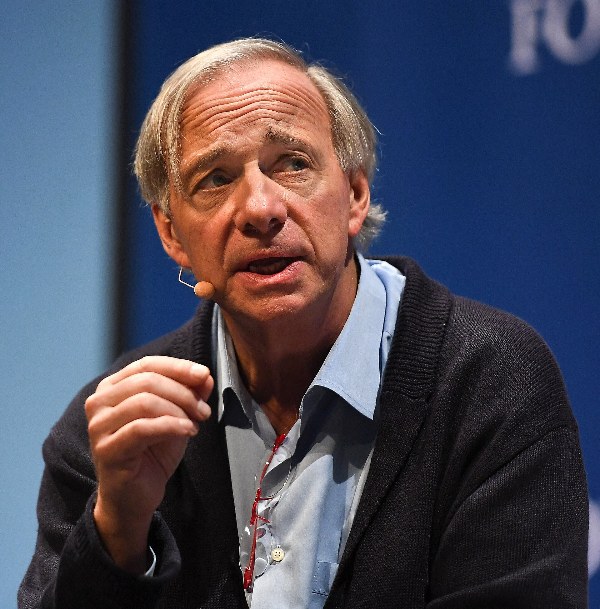 Ray Dalio, Raymond Thomas Dalio
The book covers the five principles for life Dalio built in order to make better decisions.
My posts about decision making leaned on it a lot, indirectly.
Why studying more makes you dumber - decision series 1: is more information always better?
Dalio’s first principle is ‘be a hyperrealist’, which means accepting reality as it is and responding to it. I covered the same idea in the decision series under the name ‘the Kelly criterion’.
But this book has a serious problem.
Dalio tells you to accept reality as it is and respond accordingly. Then he explains why in a sentence or two and moves on. He talks as though effort is all it takes to become a hyperrealist.
There is something he overlooked. Being a realist is really hard.
As I covered in the post explaining a behavioral economics paper, people cannot judge objectively.
‘Look at reality objectively, look at the facts’ is easy to say and very hard to do.
So I thought about 1) why we cannot, and 2) how to make up for it.
To become a hyperrealist,
you have to do two things well. You need to know reality 1) widely and 2) accurately. People seem to focus only on knowing a lot, never on knowing correctly. So they know a lot, plenty of it wrong, and in the end they make no shortage of judgments without getting much more accurate.
Why can’t we become hyperrealists? The book doesn’t go into it. But I think there are two big obstacles: guesses and desires.
Guesses and desires are not reality. We keep forgetting that, act on bad information, and lose out. Let’s look at both cases.
First, confusing desire with reality (1.4.a)
The usual word for it is wishful thinking.

You see this a lot in elections. Candidates from minor parties, and independents, usually poll low from the first day of campaigning to the last, and apparently they all still believe they can win ‘miraculously’. Another example: people rate the outlook on a stock more positively for no reason other than owning it. But the price dances around with no regard for my hopes.
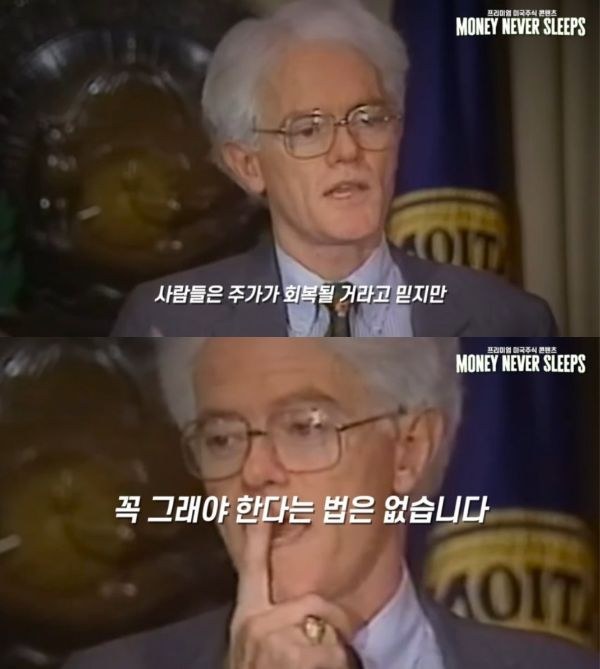 from a Peter Lynch speech
In all of these, desire has bent reality. Someone has mixed up ‘reality is like this’ with ‘I wish reality were like this’ and ‘reality ought to be like this’. Deny human nature and argue only from what ought to be, and it is hard to come out ahead over the long run. That is one of the reasons the Soviet Union collapsed. The Soviet picture of a human being who is altruistic by nature was an ought, or a wish, and not reality. At the end of denying reality, output on the collective farms was dismal, factory production was dismal, and so were everyone’s lives.
 The Ukrainian famine
Desire has nothing to do with reality. Confuse the two and your choices come out warped.
Second, confusing my guesses with reality
I don’t think the book covers this one. People understand reality through mental models. We do not see reality as it is. Reality is complicated and we are short on time, energy, and knowledge, so we use a simplified model of it instead. That is a mental model. The closest everyday word for it is ‘worldview’.
A mental model is far simpler than reality, which is what makes it practical. You don’t need the exact temperature every day, because the mental model called four seasons lets you predict tomorrow’s weather ‘roughly’.
Simple and practical, but only ‘roughly’. Because the model simplifies reality it is never perfect, so error turns up every time. My knowledge is incomplete, which means reality can run differently from what I think. The way there are cold days in spring.
 And downpours nobody saw coming. (Source: JoongAng Ilbo)
But people overlook the chance of being wrong. And since the thought of being wrong is unpleasant, they look away from it.
Stock trading has a concept called stoploss. Once losses pass a line, you cut. It is best if you never have to use it, of course. Trades that only ever make money would be lovely. Life doesn’t work that way, so you have to prepare for being wrong. How to prepare for risk is something I’ll talk about when I cover the book ‘The Black Swan’. (Subscribe if you want the notification!)
To sum up,
watch the habit of confusing your desires and your guesses with reality. Getting past it is what makes a hyperrealist.

To tell desire from reality, you have to move your own position. If a stock you hold looks like it’s going up, imagine you have already sold it and make the prediction again. Or think it through in the third person, as if the situation were not yours.
To tell a guess from reality, try picturing the chance your prediction is wrong. Then work out what happens in that case. The way you think about how badly it could go when you feel like driving drunk or jaywalking.
Looking at reality as it is is where problem solving starts.
Want practical tips that make you a little smarter every week?
I cover persuasion, marketing, writing, and the other skills modern life demands.
Subscribe now and get notified when a new post goes up!
References
You might like these too!