If you could control how people feel,
what would you want to do with it?
You can’t have every wish granted, but write well enough and you can move people some of the way.
Today we’ll go through the three strategies for moving someone from 끌리는 문장은 따로 있다.
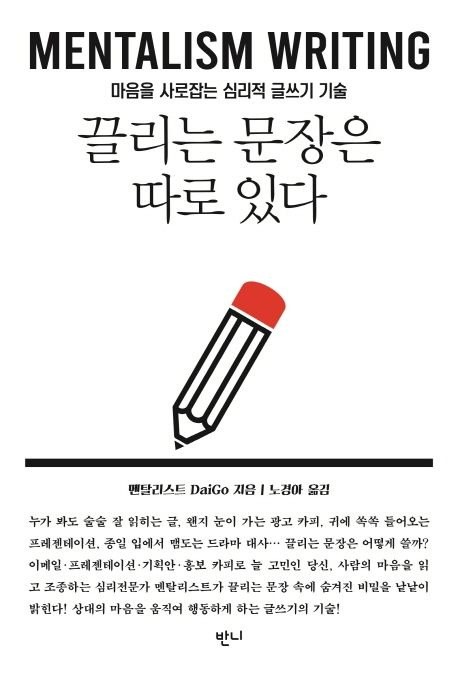
Curious how writing moves people in the first place?
The last post explained it, so I’d read that one first.
You don’t write to be read - a review of 끌리는 문장은 따로 있다, part 1
Learning the strategies matters, but you only use them well once you understand the principle behind them.
Today’s three strategies are desire, relationship, and difference.
Strategy 1. Desire and fear
A while back I wrote a post called How to persuade someone in one sentence.
How to persuade in one sentence - a summary of The One Sentence Persuasion Course, part 1
In that post I said this.
”People follow the person who backs their dreams and quiets their fears.”
That holds.
Everyone has something they want and something they want to avoid. Call them interests and worries, or desire and fear.
Desires and fears differ from person to person. But age, gender, job, and personality get you a rough guess.
Ninety percent of the desires and fears that matter come down to HARM.
HARM is an acronym for four things.
-
Health: wanting to be healthy and live long, fearing illness
-
Ambition: wanting to do something impressive, fearing failure
-
Relation: wanting attractive friends or a partner, fearing being left alone
-
Money: wanting to earn and have some room, fearing loss
So how do you put those desires and fears to work in writing?
The answer is simple.
Write on a topic that promises the reader the thing they want, or pokes at a fear and then settles it.

Poke at desire and fear like that and the reader moves.
There’s a problem here, though.
If the reader doubts us, nothing we write matters.
And if the reader trusts us and likes us, they believe us and follow more easily.
Which makes our relationship with the reader matter.
Strategy 2. Relationship: trust and liking
The same piece reads differently depending on our relationship with the reader.
We believe a close friend, or an expert.
Because we like them, and because we trust them.
The second strategy is how to build trust and liking through writing.
How do you earn trust?
Hard, isn’t it?
Let me flip the question.
What do we see in a person that makes us trust them?
We trust someone most when we watch them be honest even though it costs them.

Some people selling a used phone on Danggeun Market tell you about the small faults up front.
When someone volunteers the facts that hurt their own sale, anyone would trust them.
Give one small drawback before you give the upsides and you build trust.
We also lean on people who will never cost us anything.
Once we’re sure someone won’t hurt us or waste our money and time, we trust them.
So showing there’s no way to lose builds trust.
Marketing lines like ‘100% money back guarantee’ work this way. So does ‘learn stock investing in 3 minutes, 100% success’.
The reader has to feel there’s no way to lose before they trust us and follow.
The second keyword in relationship is liking. It matters as much as trust, because we tend to believe people we like.
Which is why a famous celebrity gets hundreds of millions of won, sometimes billions, for a single ad.

But we’re not celebrities. Often the reader doesn’t just not like us, they don’t know we exist.
So how do you earn a reader’s liking through writing?
There’s a simple way. Recognize them.
Everyone wants to be recognized, and everyone likes the person who recognizes them.
Recognition means telling someone why they’re worth admiring.
Tell them they led you to a good restaurant, or that their attitude at work made you think, or that you enjoyed the time you spent together.

Simple, right? A small reason is fine. Few people pick apart a compliment. But there has to be a reason, or it doesn’t land.
Our relationship with the reader can make writing stronger.
And one other relationship matters as much as ours with them.
The reader’s relationship with the people around them. That’s difference.
Strategy 3. Difference: safety and being special
We’re afraid of falling behind. Which is why we feel safe mixed in with the people around us.

There’s a saying: if everyone crosses together, even a red light isn’t scary.
We like the restaurant that’s already famous, and we read the reviews carefully before we buy.
To use that, you can write something like “two out of three people around you are already doing this”.
As Lacan said, we want what other people want.
So when we see other people already doing something, or wanting it, we want it too.
Partly because falling behind the group scares us.
But at the same time we want to be special, different from everyone else.
We want a secret only we know, something that’s ours alone.
Which is why the same information catches attention when you open with “I’m only telling you this~”.

A secret nobody else has, a method only a few know: that’s what holds a reader.
What do you want to write?
Those are the three strategies for shaking a reader,
so what do you want to write with them?
If you have something in mind, hold on, one thing is still left.
There’s a simple set of techniques that make writing more appealing.
The back half of this book covers techniques you can apply without much work,
so the next post covers five simple techniques for writing something strong.
Read the next post:
Five techniques that make your writing stronger right away - a review of 끌리는 문장은 따로 있다, part 3
Want practical tips that make you a little smarter every week?
I cover persuasion, marketing, writing, and the other skills modern life demands.
Subscribe now and get notified when a new post goes up!