The strange dance of the honeybee
A honeybee is doing a strange dance.
Normally a bee that finds nectar comes back to the hive and dances out the exact location. Then a scientist put honey directly above the hive, and the bee was stumped. In nature there is never nectar straight up above the hive, so the dance has no way to say it. What did the flustered bee do?
It danced an incoherent dance. The other bees watching it must have been thoroughly confused, which leaves the hive worse off than if it had danced nothing at all. That bee looks a lot like a person talking nonsense about something they don’t know. Nonsense is worse than silence.

Charlie Munger brought up this example in his 1996 Stanford Law School talk and said: “There are a lot of people who behave like that bee. […] There are people who always answer a question confidently when in fact they have no idea at all. I try to get those people out.”
There really are more people saying whatever comes to mind than you’d think. Why?
Staying quiet about what you can’t say
One reason, I think, is the attention-reward society we live in. Media went from books to broadcast to social feeds and short-form video, and the lifespan of a piece of content keeps shrinking. Views are money, so attention is money. In a society that pays you in fame and cash for stirring people up, facts matter less and less.
 Attention is revenue. Truth is a cost.
Saying something first seems to count for more than knowing it first. Maybe that’s why we end up dancing like that bee. So how do you become better than a honeybee?
The answer is simpler than you’d expect. When you don’t know, say you don’t know.
Someone asked Jack Welch, the CEO of General Electric, “What did Apple do wrong?” Welch answered, “I don’t have the competence to answer that question.” A great answer. When you don’t know something, say you don’t know. You can’t believe a word from someone who answers every question with confidence.
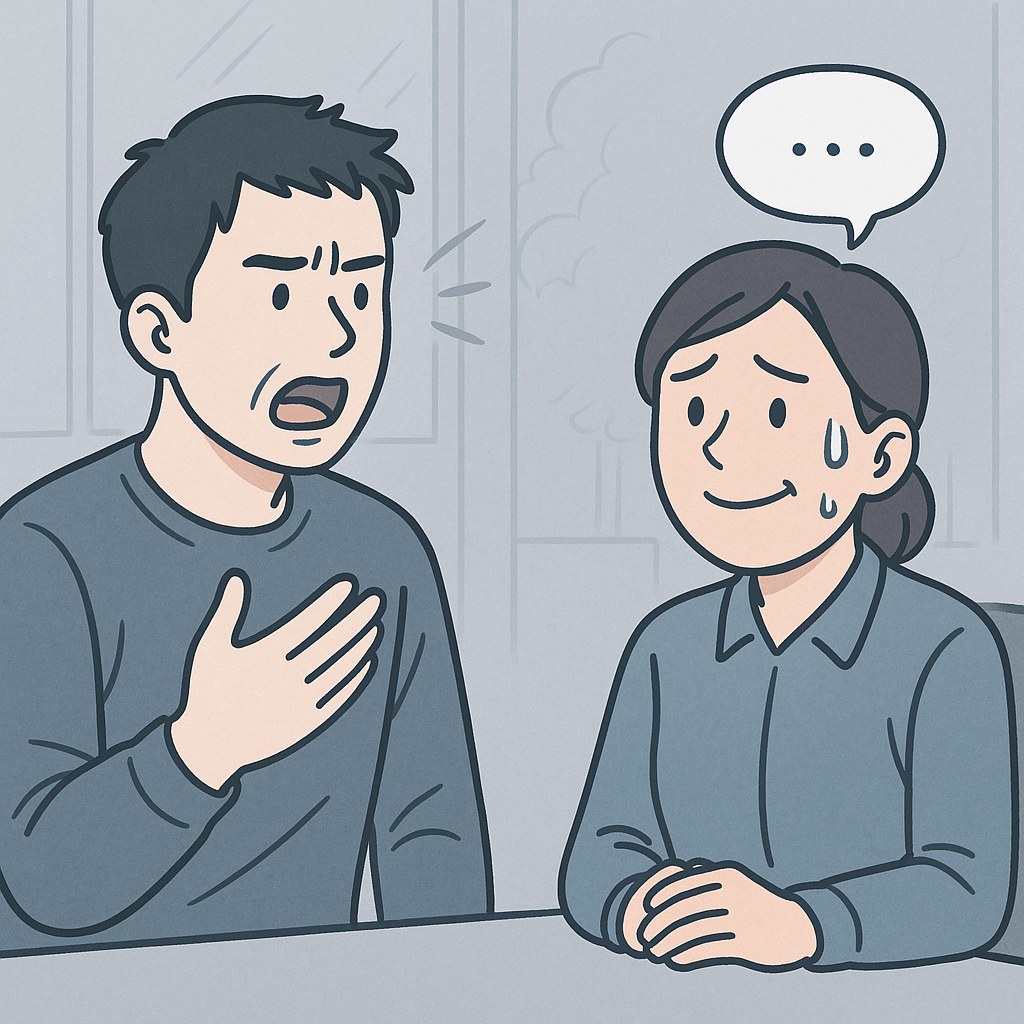
Everyone has a circle of competence, and the knowledge you hold has one too. You have to separate what you know for certain from what you half overheard. In particular, you need to be able to tell what you know from what you don’t, what you guessed from what you lived through, and what you want from what actually helps you.
This isn’t only for other people’s sake. The biggest victim of my nonsense is me. If I don’t separate baseless guesses from solid knowledge, I can’t trust my own thinking or lean on it. Standing in front of an important decision, I can’t tell whether I reasoned it through or whether I’m dancing like the bee. Someone who can’t trust himself wavers at every decision.
Earning the right to an opinion
If you want to hold an opinion, you have to put in the thinking and the research. Opinions aren’t free.
An opinion isn’t a taste. Anyone can have a taste, but an opinion held without thought is noise. So if you’re going to hold one, think it through before you speak. How do you speak responsibly, then?
First, be clear about what kind of statement you’re making.
-
(Source) “What I read in X was…”
-
(Experience) “From what I went through myself…”
-
(Opinion) “My judgment is…”
-
(Guess) “I’m not certain, but…”
Mark them like this and the listener knows how much weight to give each one.
Also, think hard about why you might be wrong. As I said before, Charlie Munger has said he only allows himself an opinion when he knows the case against it better than the people who hold it.
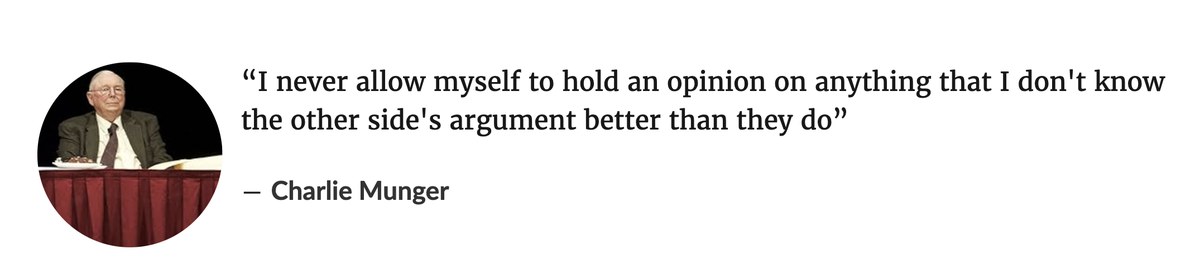 https://www.goodreads.com/quotes/7447184-i-never-allow-myself-to-hold-an-opinion-on-anything
Think hard about the ways you could be wrong (call it exception handling), and never assume a thought is right just because it turned up in your head. The more complicated the reasoning, the more easily one small mistake takes the whole thing down.
Every opinion rests on premises, so always allow for the premise being wrong. If a woman catches your eye, smiles, and you decide she likes you, don’t forget she might have smiled out of nerves, or that you might have misread it.

To sum up: an opinion carries as much weight as the thought you put into it. Stay quiet when you don’t know, keep the chance you’re wrong in view, and revise without flinching when you turn out to be wrong.
Any of those beats being the bee doing the nonsense dance. Of everything you said today, how many were things you were genuinely sure of? Count them and the number will be smaller than you expect. Those few are the ones actually worth something.
Want practical tips that make you a little smarter every week?
I cover persuasion, marketing, writing, and the other skills modern life demands.
Subscribe now and get notified when a new post goes up!
References
-
Buffett Club: Charlie Munger special 3 (recommended)
-
Book: Poor Charlie’s Almanack
-
farnam street
P.S. The hardest job of all, I think, is telling what I want apart from what’s real.
You might like these too!