This is a breakdown of the book ‘Supercommunicators’. It covers:
- how to get close to a stranger fast
- how to have the conversation people want
- how to get close to someone through questions
- how to respond so they open up
1. There’s a specific way to get close fast
What if, meeting someone new, a few sentences were enough to win them over? If you could end up like friends who’ve known each other for years, would you try it?
When I join a new group, a new job or a club, I try to get close to people quickly. It doesn’t always work. Sometimes there’s a pecking order, sometimes tastes don’t line up. If personalities clash, you can work at the same company for years and never get close at all.
Then there are the people you get close to after one or two meetings. Sometimes it happens so fast and so accidentally that you wonder how. Which makes getting close look like a case by case thing.

Is there a way to get close to people fast?
An American study describes a method called the ‘Fast Friends Procedure’, and following it gets 60% of people close within an hour. The 1995 study at the State University of New York had two people talk for 60 minutes. For that hour the two traded questions.
Every question had been picked carefully by the researchers. They start light, something like “would you like to be famous?”, and were designed to build toward heavy ones about a death in the family.
More than 300 participants traded 30 questions each over those 60 minutes, and nobody told them to keep in touch afterward.
Two months later, 60% of them had contacted each other privately. A year later, some of them had married each other.

So what’s the secret in questions that make total strangers close in an hour?
The study found three factors behind getting close quickly. They aren’t the ones you’d guess. Not shared traits like smoking or religious views. Not joking around together or doing something hard together. (Worth knowing when you’re planning a company workshop.) Shared experience and shared traits didn’t help much.
The three that do it are 1) sharing your feelings and vulnerability, 2) responding to what the other person says, and 3) believing the other person likes you. That’s the secret behind strangers becoming friends in an hour.
How do you use this in ordinary life?
And past that, is there a good way to build a good relationship and be liked?
The book I’m covering today, ‘Supercommunicators’, explains it as four rules.
 Supercommunicators. Source: https://www.amazon.com/Supercommunicators-Unlock-Secret-Language-Connection/dp/0593243919
The psychologist Adler said every problem in life is a relationship problem. This book might hand you a thread to pull on.
2. The core of communication: syncing up
The book says people who build relationships well are good at syncing up. When you’re synced, you understand the other person’s words and thoughts better. In that state your breathing, pulse, expressions and feelings line up with theirs. It’s also called neural synchrony. To communicate well, you have to create neural synchrony.
Some people do this inside a group and raise the whole group’s ability to communicate. They often end up as the center of the organization, with wide social networks and some authority or power. Life looks different for people who communicate well.
They also talk differently. They’re good at the kind of conversation where you get to know someone. That’s a conversation where you learn who the other person is and help them understand you. In a relationship, that’s what a meaningful conversation is. The book gives four rules for having one. Here they are as the book states them.
Rule 1: pay attention and work out what type of conversation is happening.
Rule 2: share your own goals and ask about theirs.
Rule 3: ask about their feelings and share your own.
Rule 4: check whether social identity matters in this conversation.
Vague, right? Let me put them in plainer words.
Rule 1: have the conversation the other person wants. Rule 2: share and support values and goals. Rule 3: share feelings and vulnerability. Rule 4: don't pin a label on the other person.
Follow those four and you can be a supercommunicator too.
In short:
1. Say the thing the other person wants to hear.
2. Listen, ask and respond until you find what that is.
(These rules work in a negotiation too, by the way.)
So there are three skills to learn.
-
how to listen well
-
how to ask well
-
how to respond well
Ask, listen, react. That’s all of it. Communication is easy.
Want practical tips that make you a little smarter every week?
I cover persuasion, marketing, writing, and the other skills modern life demands.
Subscribe now and get notified when a new post goes up!
3. The core of communication: say what they want to hear.
The governing principle of conversation is working out what the other person wants. It’s also the basic principle of How to Win Friends and Influence People, by Dale Carnegie. People talk because they want something, and they have something they want to hear or want to say. What they want to hear is the reason the conversation is happening.
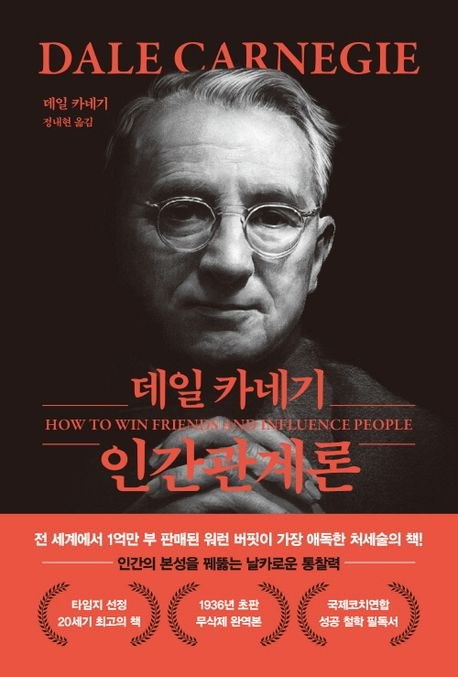 Source: https://www.amazon.com/How-Win-Friends-Influence-People/dp/0671027034
Morgan Housel’s book ‘Same as Ever’ quotes the columnist Jason Zweig on this (page 325).
-
Lie to people who want to be lied to and you can make a lot of money.
-
Tell the truth to people who want the truth and you can make a living.
-
Tell the truth to people who want to be lied to and you go broke.
Say the thing the other person wants. When someone unloads a problem on us, the instinct is to hand them a solution. Motivational interviewing calls that the fixing reflex. Like a knee jerking when you tap it, it’s the reflex to correct someone and set them right. All it produces is resistance. Give a solution to someone who wants to complain and now they can’t complain.
Saying whatever comes to mind isn’t a conversation. Even when your mouth itches to hand over the answer, hold it. Imagine ordering pork belly at a restaurant and the owner brings you a pork cutlet because the cutlet is better. Even if you like pork cutlet, you’re annoyed first. Your wishes got ignored. Don’t do that in a conversation. Which means starting from what the other person wants. Usually someone in a conversation wants one of three things, and you can sort conversations into three types by which one it is.
1. Advice: help me!
2. Empathy: comfort me!
3. Support: agree with me!
The book calls them ‘decision-making conversations’, ‘emotional conversations’ and ‘social identity conversations’, but advice, empathy and support are much clearer. Someone unloading a problem doesn’t always want a solution. They might want empathy, some comfort, or the support of being listened to quietly. Offer a solution without considering that and the conversation just piles up frustration. If the solution occurred to you immediately, they’ve probably thought of it too. On top of that, the usual order of frequency is support > empathy > advice. Asking for advice is rare. Most conversations are support or empathy, someone wanting their story (or their griping) heard.

How do you know what they want? First, listen with your whole attention. The core of a conversation hides between the lines. Don’t think about what you’ll say next, or about dinner. Put everything into it and hear what they didn’t say. How do you hear what someone doesn’t say? Start with the first skill of conversation, listening.
4. The skills of communication
1) Listening - how to hear what wasn’t said
Understanding what someone really means takes more than the words. The most important message sits between the lines. The emotional state and the patterns behind the words, the parts they didn’t say, are what you have to hear. People rarely say what they actually mean. Sometimes we aren’t close enough for that, and often they don’t know what they want to say. So the words alone won’t get you there. Hearing between the lines takes pouring your whole attention into the person. Listening the way you listen to music on the radio won’t do it.
Listening, we usually lock onto the facts. But as the purposes above show, facts are only part of a conversation. You understand the whole of it once you also understand the feelings and the values. For that, the book introduces listening in all directions, which comes at a conversation from three sides. First the facts (what happened), second the feelings (what they felt), third the values (what it meant to them). I’d say the order of importance is again values > feelings > facts.
When someone understands you along all three, the book says they turn up things in your story that you didn’t know were there. Listen with your attention on information, feeling and meaning and you can go deep enough to reach an insight the speaker didn’t have. All three sides matter if you want to truly understand someone.
 What do you think these two are feeling?
Beyond the lines themselves, watch the nonverbal parts, the gestures and the emotional state. As the book notes, gestures and emotional states are more honest than words. Watch closely for how someone reacts emotionally to a particular word or topic. Best of all is noticing that their face lights up whenever a certain person comes up, or that their voice drops when work does.
Listening isn’t nodding along, and it isn’t remembering what they said. It’s the process of getting a feel for who they are, what they like and what they want.
Sometimes what they say isn’t enough. Then you have to ask, so there’s more to hear. Listening has depth to it, and so do questions: there’s skill and depth in asking too.
The way you ask to collect scraps of information is not the way you ask to get someone’s deepest feelings shared.
The good news is that questions which lead to a deep relationship and a deep conversation are easy for anyone. There are only two rules to learn.
I’ll cover the way of asking that gets you close fast in the next post.
Want practical tips that make you a little smarter every week?
I cover persuasion, marketing, writing, and the other skills modern life demands.
Subscribe now and get notified when a new post goes up!
Books referenced:
-
Book: Supercommunicators (link)
-
Book: How to Win Friends and Influence People, by Dale Carnegie
-
Book: 알기 쉬운 동기면담 (recommended)
-
Book: Never Split the Difference (recommended)
-
Book: Getting More
You might like these too!