Here’s what this post covers.
Does morality come from reason, or from emotion?
Why people hold moral views different from mine
How to settle a clash of values inside a team
0. Why is that person like that?
Do you ever catch yourself thinking, “why does that person act like that?”
At work I thought it almost every day.
Put different people together and conflict shows up. Usually at work. My old team had one of these. One member said that once your own work is done you should be free to go home. Another said you stay until the whole team is finished. They clashed.

The conflict came out of values. One person cared about efficiency and personal responsibility, the other about cooperation and the group. There’s no clean answer to this. Both sides have their logic. Owning your work and finishing it matters, but work doesn’t always divide cleanly, and helping each other out can pay off for everyone over time.
A conflict like this has to be settled by a value judgment. Even if I take one side, though, it’s half a solution if the other side can’t accept it. Settling it properly means reaching a conclusion everyone accepts, and that means understanding the other person’s position. It’s hard to accept a position you don’t even understand.
To cooperate, we have to understand what other people value. Bringing different people together means being able to understand the different versions of “right” in their heads. Decide that the people who vote for the other party are stupid or evil (even if they are!) and the conflict only deepens.
So what kinds of values are out there?
And what is a value, anyway?
The book I brought to answer that is The Righteous Mind. Kim Bong-jin, the head of Baemin, also recommended it in his book 책 잘 읽는 방법.
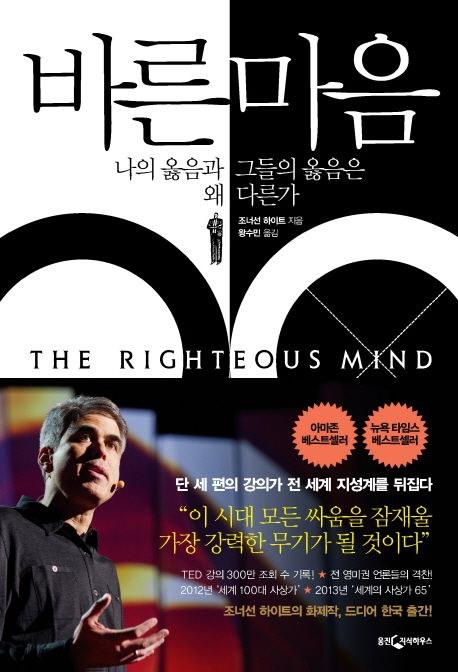 Source: Kyobo Book Centre
Jonathan Haidt, the moral psychologist who wrote it, covers two topics.
First, he introduces the nine values people feel are “right”. He also shows how different people weigh those nine differently.
Second, he covers how to build a strong organization out of belief and belonging. He shows how to gather people using sacredness, too.
The book doesn’t tell you what is moral. It tells you what people think is moral.
Let’s walk through the different value systems from a neutral seat.
1. Morality is a feeling
Here’s a short story. Read it and decide whether the people in it did something wrong.
A family’s dog was killed by a car in front of their house. They had heard that dog meat was delicious, so they cut up the dog’s body and cooked it and ate it for dinner. Nobody saw them do this.
Do you think the family did something wrong by eating their dog?
If so, why?
The example comes from the book, and since the author is American, I think he expected everyone to feel it was wrong. A Korean reader knows some people do eat dog, though. Boshintang culture has all but disappeared, but there are still people around us who eat dog meat.
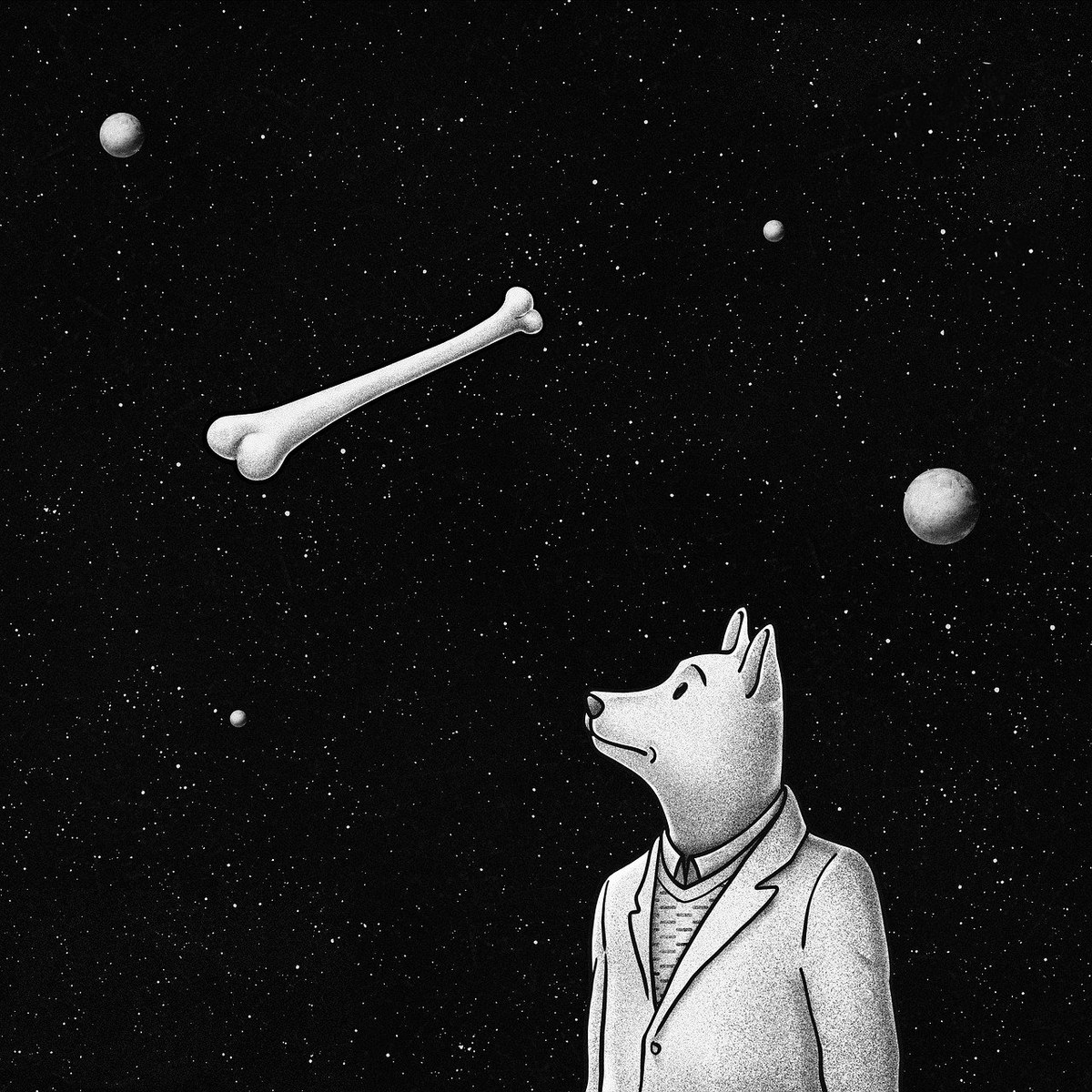
Some of you are on the other side, thinking: how could anyone eat dog meat! The dog was already dead, so nobody was harmed, and eating it can still feel wrong. Some people can give a reason. Others can’t, and just say it’s obviously not okay.
Here’s another example like it.
A grown son and his father call each other by their first names.
A Korean will find that uncomfortable too. It feels rude, but pinning down what that politeness is, and who gets hurt when you skip it, is hard. Morality exists in places we can’t explain. Even without an explanation, we can pick out the right behavior. Small children sort good behavior from bad on instinct.
Moral judgment is emotional. Whether I like dog meat or hate it, it’s a feeling. Someone who disagrees with me is simply feeling something different. We each carry different feelings. Same as taste in food or music.
Emotion does plenty of other work besides morality. As I covered in an earlier post, emotion is what creates motivation. It’s also what makes something stick in memory.
I found the best brain science book - 1 - a review of Brain View (1)
There’s always emotion behind an important decision or action. Morality is one of them.
What counts as right seems to vary from person to person, though. Americans chase “liberty”. That contrasts with the equality Nordic societies go after.
How did these moral values come about?
2. Morality is a tool of human society
So where does morality come from?
Jonathan Haidt, who wrote The Righteous Mind, offers a hypothesis that treats morality as a tool. His view is that a range of moral instincts arose and stuck around through evolution so that society could develop and hold together.

Moral instincts pull people into cooperation, which keeps society running and growing. That sounds right intuitively, since moral behavior usually means being fair and helping the weak. Long before we had laws and institutions, humans built societies and cooperated with each other. Moral emotion probably served as the rules and the standards back then.
Morality doesn’t always produce cooperation, though. As we saw at the start, differences in moral values cause plenty of conflict. So how do you handle a problem that comes from differing moral tastes?
First you have to know which moral emotions are out there. Understanding the other person’s moral emotions is what lets you settle the conflict. There’s another benefit as well. You can use moral emotions to build a cooperative, tight-knit organization.
Moral emotions work a bit like MBTI personality types. The Righteous Mind explains nine of them clearly, with plenty of examples, and we’ll go through them in the next post.
Learn the nine moral values and you’ll be able to understand people unlike you, and work with them.
Want practical tips that make you a little smarter every week?
I cover persuasion, marketing, writing, and the other skills modern life demands.
Subscribe now and get notified when a new post goes up!
Next post
References
- The Righteous Mind (link)
You might like these too!