The Righteous Mind review reads best in order.
Part 1:
If you’ve ever asked these questions, here are the answers.
Why do I keep clashing with other people?
What values make other people act the way they do?
What does the world I want look like?
The moral sense, the urge to pursue what’s right, is a tool that evolved for cooperation. This review series on The Righteous Mind walks through the nine moral emotions and how you can use them to move people.
If you’re a manager or a leader who has to settle conflicts and pull people together, you should be putting the nine to work.
I’ll explain them more simply than the book does.
Picking up from the last post, here are the remaining three.
7&8) Order: “authority” keeps everyone in rank, “liberty” throws out tyrants
Authority: everyone should keep to their place and their role.
Liberty: I won’t let anyone trample me.
Loyalty and honor alone don’t keep a society running. A society has many roles and ranks, and they have to respect each other. Rank has been part of human society for a long time, Korean honorific speech being one example, but animals that live in groups have it too, chimpanzees included. Rank isn’t something human society invented. It was latent in our instincts long before that. There are societies that set out to abolish rank and ended up with it anyway. Rank gives a society order, which heads off conflict and competition. (whether that order is right is another matter) The virtue that stands up for this kind of order is “authority”.
Order shows up in many forms. In Korea the classic one is seniority, what we call jjam. It carries weight in the military and at work, and in hobby clubs too. The famous line for order is gun-gun sin-sin bu-bu ja-ja (君君臣臣父父子子): let the ruler act like a ruler, the subject like a subject, the parent like a parent, the child like a child. A lot of people these days don’t seem to agree with that. Authority looks weaker than it used to be. That’s because people also carry an urge to resist it.
People don’t submit to every order. Some orders get torn down. People resist when the order feels unjust. The anger at illegitimate power, and the resistance to it, comes from the “liberty” foundation. Like authority, liberty turns up in other animals. When the chimpanzee at the top gets too greedy, the others band together to pull him down, and sometimes kill him. The refusal to tolerate somebody lording it over you looks like part of human nature.
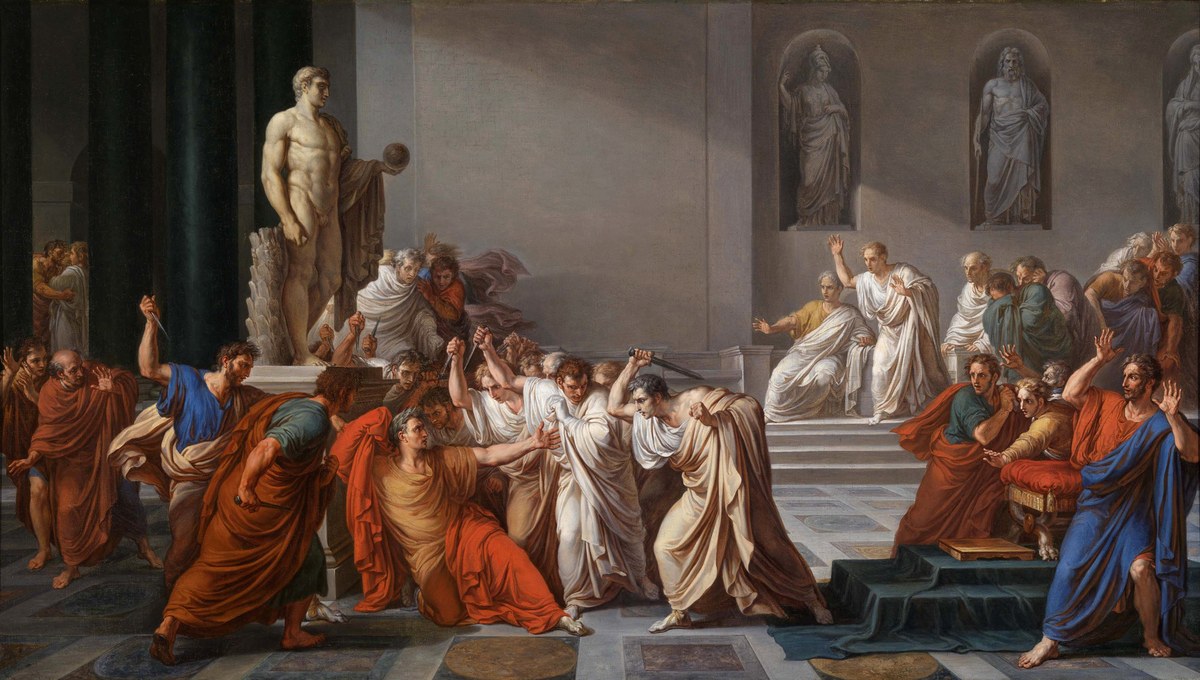 Caesar poked the “liberty” foundation and dozens of men assassinated him. (image source: Wikipedia)
That’s eight foundations so far. The last one is unusual: “purity”, which deals with cleanliness.
9) Purity: keeping myself and the world clean
Protect what’s clean and keep it close.
Destroy what’s dirty and keep it away.
In evolutionary terms, humans are omnivores, so we had to find and eat all sorts of food depending on the situation. That meant judging what to eat and what to leave alone. Eventually we developed our own standard for sorting food we could eat from food we couldn’t, an instinct for telling good from bad. That’s the “purity” foundation.
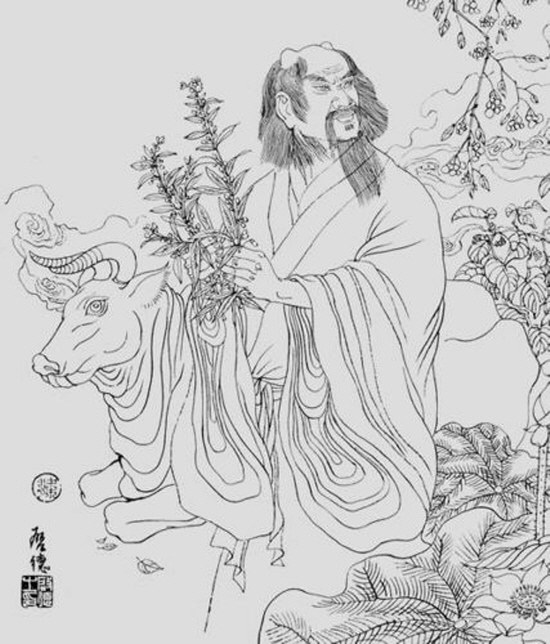
The prototype of purity as food sorting shows up in Chinese mythology too. Shennong, the ox-headed half-man half-beast, is said to have eaten plants himself to sort the edible ones from the poisonous ones. My guess is that people fed various grasses to oxen and watched whether they died.
Purity as food sorting has something in common with vegetarianism, with halal and haram in Islam, and with kosher among Jews. For an odd example, detox juice strikes me as a product that uses purity well. A drink that seems like it will make you clean appeals to people for that reason. Naturopathic medicine, and the pursuit of chastity, can be explained by the purity foundation too.
Purity also helped a great deal with preventing the diseases that come from living together. It pushed people to isolate and avoid the sick or the outsiders who might carry an infection. There’s research showing that societies with less disease are, statistically, more open. Purity shows up in many forms as a tendency to keep the body clean and sacred. It’s probably why calling someone “filthy” works as an insult.
Moral foundations build organizations
Moral foundations are tools. The clash between teammates I described in the first post is easy to settle once you understand each person’s foundations. I didn’t know about them at the time, but if the same thing happened now I’d probably mix the care and proportionality foundations to solve it.
I’d use the purity foundation as well. Purity can be applied in an unusual way. Beyond our bodies, it makes us assign enormous value to a people, a country, a place (a church, Mecca), an object (a cross, the Eucharist), a principle, and hold them up. And that pulls people together. Along with the loyalty we covered earlier, it’s the force that makes a community.
In the next post I’ll show you how to build a powerful organization out of loyalty and purity.
P.S. Which foundation is strongest in you?
And the people you clash with most, which foundation is strong in them?
Want practical tips that make you a little smarter every week?
I cover persuasion, marketing, writing, and the other skills modern life demands.
Subscribe now and get notified when a new post goes up!
Next post:
References
-
Book: The Righteous Mind (link)
-
Moral foundations research: https://moralfoundations.org/
-
Shennong image source: By ZhugeBo, own work, CC BY-SA 4.0, https://commons.wikimedia.org/w/index.php?curid=131698373
You might like these too!