You end up asking for a lot of advice as you go through life.
Searching YouTube or Instagram is a form of asking for advice too.
Find good advice and follow it and your life usually gets better, but not all advice helps.
Getting hurt by bad advice isn’t rare either. You’ve probably heard about someone who believed a rumor going around, drank green vegetable juice, and wrecked their liver. And you probably have a friend who bought a coin someone recommended in a group chat and took a big loss.
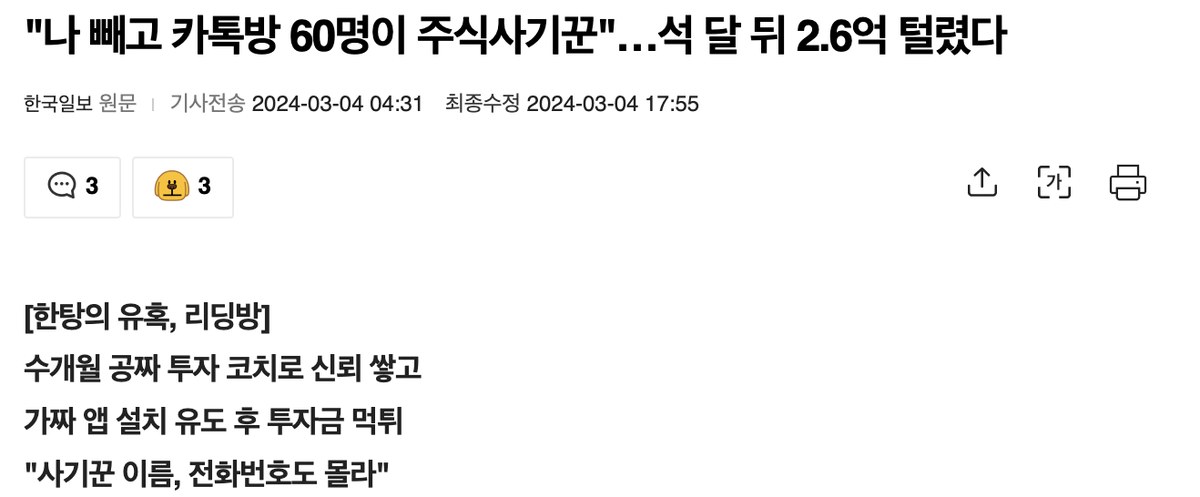 https://news.nate.com/view/20240304n00880
There is bad advice out there, and past that, there’s malicious advice.
So you need to be able to tell the good from the bad.
There’s a problem, though. The person asking for advice has a hard time judging whether the advice is accurate.
You asked because you didn’t know in the first place, so how are you supposed to tell whether the answer is right or wrong? Judging the advice itself is hard.
It’s the same as trying to decide whether to buy a used car with no clear history.
So we judge the adviser instead of the advice. We judge whether the person can be trusted.
Which makes the advice problem a people problem, and a trust problem. (Most social problems turn out to be trust problems.)
Humans have always lived in groups, so we size people up by instinct. We decide fast, off looks and image, whether someone is trustworthy. We take degrees, news articles, rumors, and impressions into account too. But instinctive judgment isn’t much of a method.
According to research, simply smiling makes people more likely to trust you.

There have always been plenty of people who fall for a con artist playing the expert, or who believe a stock-picking show.
Instinct is fast, but it’s inaccurate and easy to exploit.
We need a way to pick out an adviser worth trusting.
The investor Ray Dalio says the same thing in his book Principles.
One of the most important decisions you can make
is who you ask your questions of.
The ability to find a good adviser is the ability to get advice, and that’s a skill for living well in a complicated world.
So is there a way to find one?
Want practical tips that make you a little smarter every week?
I cover persuasion, marketing, writing, and the other skills modern life demands.
Subscribe now and get notified when a new post goes up!
Three tests for an adviser you can trust
Luckily, Adam Grant, a professor at Wharton, one of the best schools in America, gives three tests for sorting trustworthy advice in his book Hidden Potential.
The book names them caring, credit, and closeness.
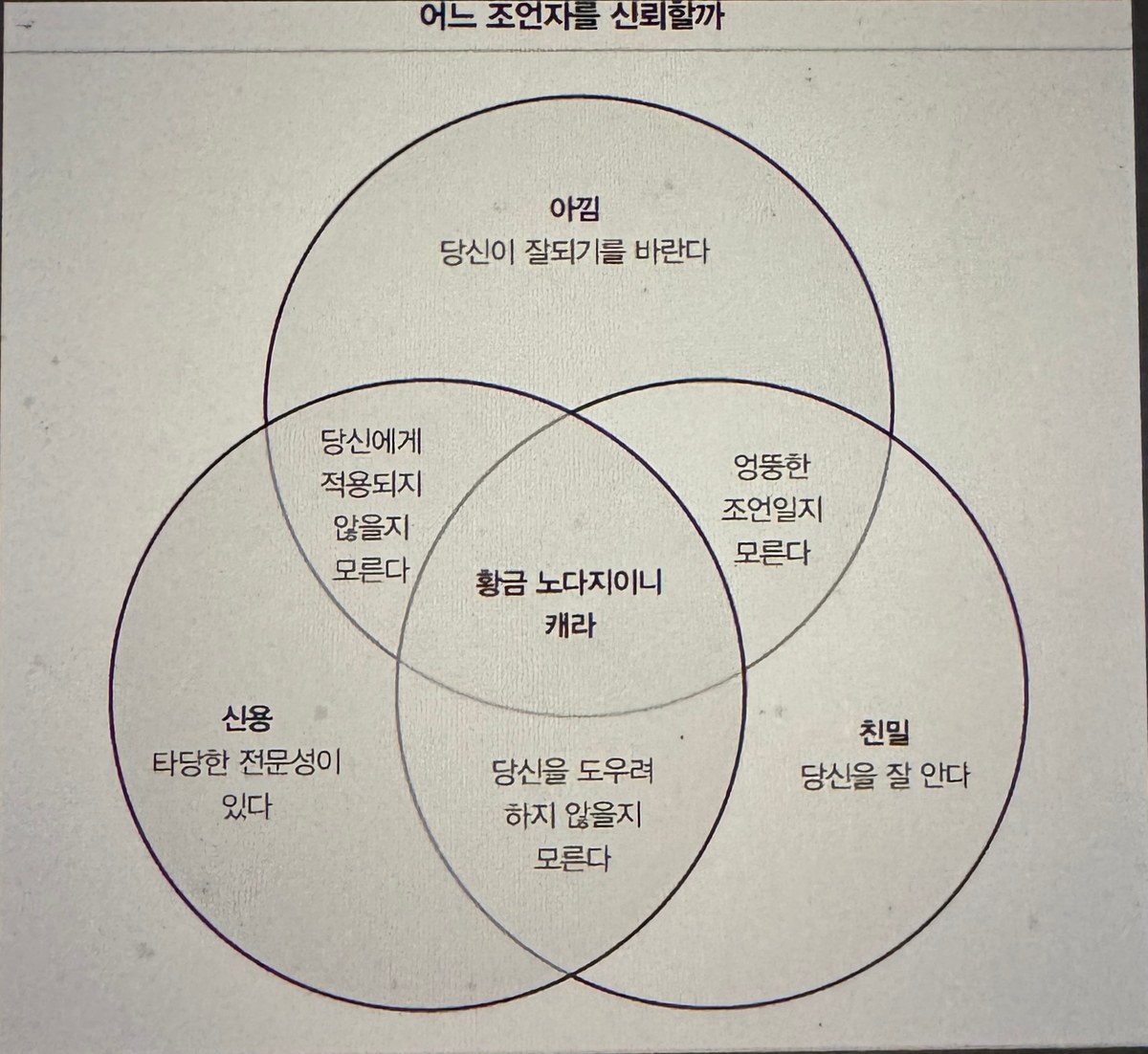
The analysis is excellent, but the word choices drifted a bit in the Korean translation.
Sincerity, expertise, and familiarity are the more accurate terms.
I’ll take them one at a time.
- Sincerity
You need to know whether the adviser cares about you, whether he honestly wants things to go well for you. The thinking is that advice from someone who cares about you carries real intent. Even when the person isn’t someone who cares about you, ask whether the advice itself is sincere. This ties into conflicts of interest. A used car dealer only makes money if the car sells. Can you trust what he recommends? Not unless there’s a solid inspection process or a refund condition.

2. Expertise
Expertise means whether the adviser knows the field he’s advising on well enough. If someone handing out investment advice doesn’t know investing or the industry in question, then however sincere and kind he is, the advice is hard to trust. This runs into the Kelly criterion problem I’m always citing. People tend to believe whatever they want to hear, or whatever’s entertaining, even from an adviser with no expertise, so you have to notice that bias and cancel it out. Spend some time on YouTube and you’ll also find people who are experts in one field (or not even that) acting like experts on every problem in the world. Con artists, basically. Knowing the boundary of your specialty, your circle of competence, and hesitating to advise outside it, is the mark of a good adviser.
- Familiarity
Familiarity means how well the adviser knows you. Different people need different advice. You can’t write a prescription without knowing the patient’s condition, and the same way, only someone who knows the person asking can give advice that actually fits. You zero a rifle to make it accurate, and advice gets zeroed the same way, with the person as the reference point. Every rifle needs its adjustment in a different direction, and so does every person, which is why you should ask someone who knows you well.

Put together, the signs of good advice look like this.
-
Does the adviser want things to go well for me (or is he indifferent to me, or looking after his own gain)
-
Does the adviser know the field he’s advising on
-
Does the adviser know me
Keep those three in mind and you can dodge bad advice. They also tell you what to weigh when you accept advice. With an adviser short on sincerity, weigh the conflict of interest. Short on expertise, weigh the accuracy. Short on familiarity, weigh the odds that it doesn’t fit you.
I hope it helps you make better decisions.
Want practical tips that make you a little smarter every week?
I cover persuasion, marketing, writing, and the other skills modern life demands.
Subscribe now and get notified when a new post goes up!
You might like these too!