Do you follow your gut?
The look in a stranger’s eyes, a book cover you pass in a store, the inside of a restaurant. We judge all of it on instinct, the moment we see it.
Your gut is fairly accurate. There’s a reason people tell you to stay away from anyone who gives you a bad feeling.
It’s fast, too. It decides in the time it takes to blink.
Your gut makes decisions easy.
So can you just trust it and get on with your life?
The person who came across cold at first and got more appealing every time you met. The shabby gukbap place with rude service and great food. The IPO you were sure would go up and that lost half its value…
Your gut has betrayed you plenty of times. The world is too complicated to run on instinct alone.

So is there a way to predict the complicated future your gut can’t?
There is. It’s a way of thinking called second-order thinking, and that’s what I want to go over today.
Second-order thinking goes one step deeper than first-order thinking. First-order thinking is your gut, the thought that shows up right away. It’s useful day to day, for picking what to wear or what to eat, and anyone can do it. But its limits are obvious in front of a complicated problem.
The Australian toad story is a good example of where first-order thinking stops.
Twenty years ago the Australian government released toads to wipe out a pest, since toads eat them. A few years later the pests were down.
But the toads multiplied and wrecked the ecosystem. They breed fast, and Australia had nothing that eats toads.
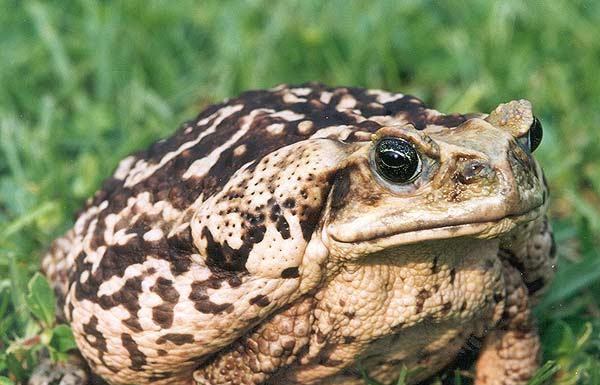 The cane toad, which took over Australia thanks to first-order thinking
The story shows where first-order thinking stops. Anyone can see the first result, fewer pests, with first-order thinking alone. But can you also see the ecological damage that killing off the pests causes? First-order thinking doesn’t reach the second-order result. To see second-order results, you need second-order thinking.
Second-order thinking asks what the toads will do to the Australian ecosystem over the long run. That’s the shape of it: what plays out over time, the knock-on effects, how other people react, everything that comes after the first result. In a complicated situation, it gets you to the choice that’s better in the long run.
The investor Howard Marks explains it this way in The Most Important Thing.
“First-order thinking is simple, along the lines of ‘the company looks good, so the stock will go up.’ Second-order thinking is deep and wide and complicated. You can’t win a competition with the first-order thinking everyone else is already doing.”
 Howard Marks
In a competition you only get ahead by deciding better than the next person. Second-order thinking is a good weapon for that.
It also gets you to better decisions when you change jobs, invest, meet people, and run a business.
So how do you do this difficult second-order thinking? I went looking and couldn’t find a concrete method anywhere.
So I put one together myself.
[How to do second-order thinking]
-
Imagine what second and third-order results the first result will set off.
-
Imagine what happens over the long run. (How does this look in 10 minutes, 10 days, 10 years?)
-
Imagine how other people will react to your decision and to the first result.
In short, you have to imagine the answer to “and then what?”
 Second, third, fourth-order results… the further out you look, the more accurate the prediction.
Build up your second-order thinking and it works
when you’re making money, meeting people, looking after your health,
and in every other decision you make.
Bad news for the Australian toads, though!
P.S. Second-order thinking finds the root cause of a problem too.
I think it’s the same idea as the 5 whys technique Amazon uses so much.
Explaining it here would run long, so I’ll leave a link instead.
https://thod.tistory.com/entry/5why-design-research-techniques
Want more? (reference links, there’s nothing on this in Korean)
https://fs.blog/second-order-thinking/
https://neilkakkar.com/second-order-thinking.html
https://medium.com/@noahmp/second-order-thinking-3fc2a224b131