Twenty years ago, during the Iraq War, US Secretary of Defense Donald Rumsfeld was asked at a press conference what the grounds for the war were. This is how he answered.
There are things we know we know (known knowns),
and things we know we don’t know (known unknowns).
But there are also things we don’t know we don’t know (unknown unknowns).
The line got famous enough that it turned into a framework, the Rumsfeld matrix.
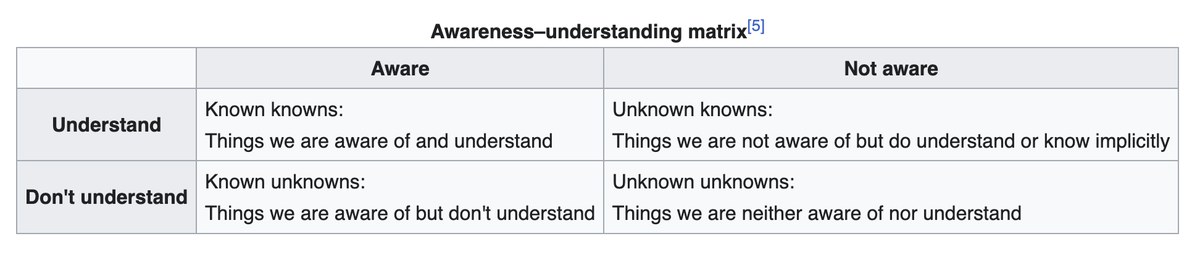 https://en.wikipedia.org/wiki/There\_are\_unknown\_unknowns
The point of the Rumsfeld matrix is knowing that things you don’t know you don’t know are out there, and staying careful about them. It runs into black swans as well.
Unpredictable things do happen, just as Rumsfeld said. A good example is the Challenger explosion at NASA in 1986.
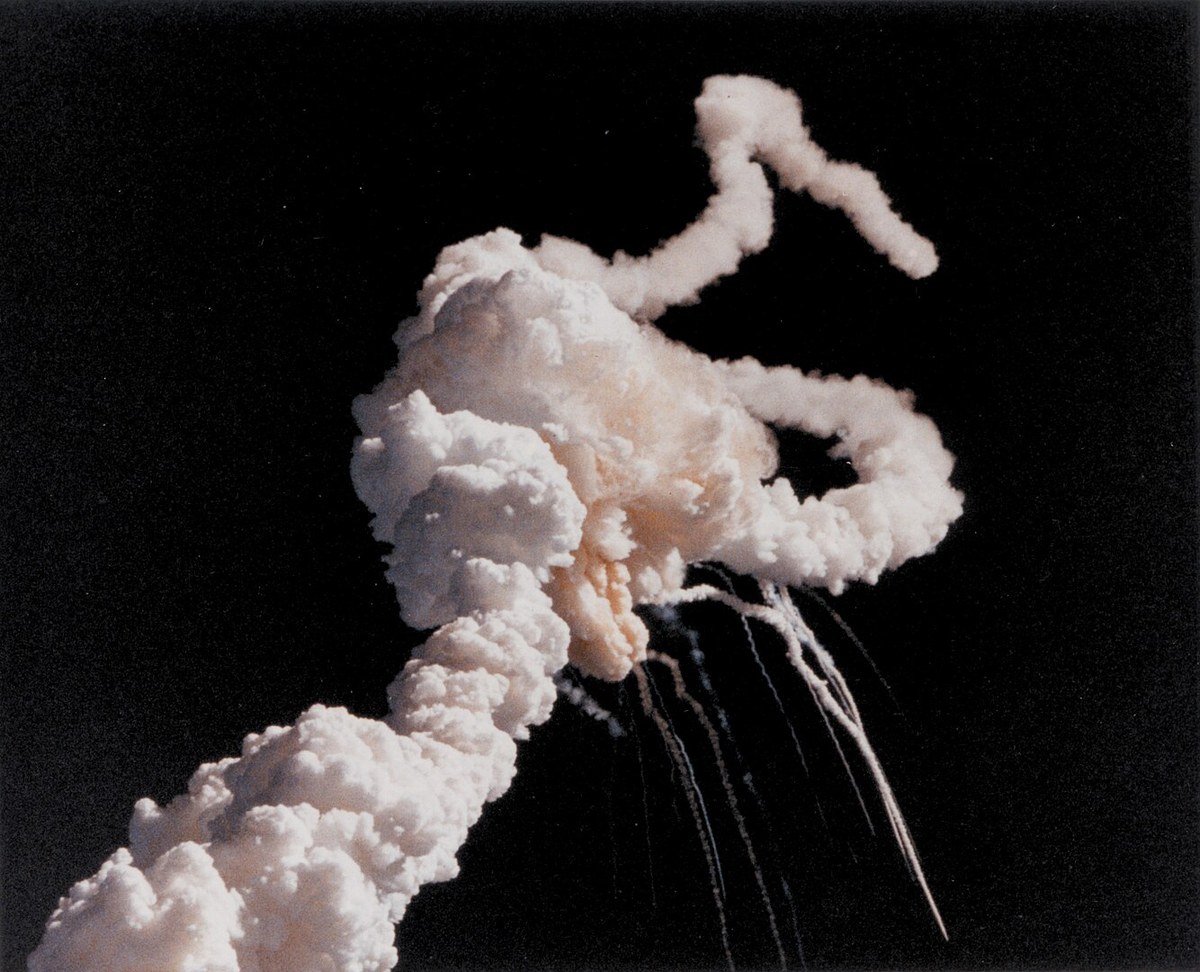 Source: Kennedy Space Center
In 1986, NASA’s Challenger blew up because of a rubber O-ring 6mm thick. Earlier launches had no trouble with it. But launch day was unusually cold, the shuttle sat outside for about two hours while another fault was checked and the rubber lost its elasticity, and then wind shear hit the vehicle. Who could have predicted that those things would stack up? The thing you can’t predict happens anyway, and the damage is fatal.
Read that way, it looks like Rumsfeld gave the reporter a lesson in how to handle a question you can only guess at. The context around the quote says otherwise.
Want practical tips that make you a little smarter every week?
I cover persuasion, marketing, writing, and the other skills modern life demands.
Subscribe now and get notified when a new post goes up!
The truth about Rumsfeld
What Rumsfeld said after that is not well known.
And that part is the interesting one.
The reporter asks: so is the evidence that Iraq supported terrorist organizations an unknown unknown too? He is really asking whether Rumsfeld just admitted there was no case for the war. Rumsfeld answers.
I’m not going to say which it is
There’s video of it too.
It’s a strange answer. Maybe there was a reason to start the war, maybe there wasn’t. It looks like a reply to the question, but he said nothing at all. Then he cuts the reporter off.
You can read it as political rhetoric with nothing in it. You can also read it as saying the war was started to shrink an Iraqi risk that was an unknown unknown. Set the moral question aside: sometimes you have to act without knowing. Terrorism risk is like that. Even without certainty, if the danger is big enough you have to move first. But preempt every possible problem and there’s no end to it. So how much certainty do we need before we move?
Rumsfeld never said how much certainty is enough to start a war. Jeff Bezos, who founded Amazon, gives his own answer.
Picking last week’s lottery numbers
Amazon founder Jeff Bezos proposed the 70% rule in his 2016 shareholder letter. It tells Amazon employees to decide once they have 70% of the information they want. Waiting until you have all of it burns time, so at around 70% you move, and you clean up the problems afterward. The whole instruction is built around speed, because time matters as much as accuracy in a decision. However accurate a decision is, being slightly late can strip its value away. Like picking last week’s lottery numbers.
But some choices are worth taking your time over even when it costs you, the ones where the damage is fatal and there’s no undoing it. The easiest example is jaywalking. Crossing against the light saves you the wait for the green, and if you’re unlucky it gets you killed.

Pick the wrong lunch, on the other hand, and nothing fatal happens. At worst you’re annoyed for a bit, and a better dinner still leaves you with a satisfying day.
In his 2015 shareholder letter, Bezos splits decisions into Type 1 and Type 2. Type 1 decisions are like jaywalking, mission-critical, high-impact choices. Type 2 decisions are like lunch, lower stakes choices that carry little risk or can be fixed. Bezos warns that Type 2 decisions can be made fast and revised later, but rushing a Type 1 decision makes it hard to survive at all.
So the fatal and unrecoverable decisions deserve care, while the cheap ones should be made quickly, with the price of time counted in. And when you’re weighing a fatal risk, allow for being wrong for a reason you never imagined. Put all of that together and the answer comes out like this.
Make the small decisions fast, and use the time you save to prepare as much as you can for the fatal risks.
And stay aware that something unexpected can always happen.
A good way to prepare for the unexpected is a margin of safety, and I’ll cover that next time. Subscribe and I’ll send you the notice!
Want practical tips that make you a little smarter every week?
I cover persuasion, marketing, writing, and the other skills modern life demands.
Subscribe now and get notified when a new post goes up!
References:
-
The book Superforecasting
-
Jeff Bezos shareholder letters (2015, 2016)
You might like these too!