Sam Altman, the head of OpenAI and the man behind ChatGPT, said this in an interview.
There’s nothing better than sitting down and writing.
Writing is externalized thinking.
Sam Altman - OpenAI Founder Reveals His Writing System
For Altman, writing is a tool for making thinking clear. When he works on a hard, tangled problem, or explains his own thinking to someone else, he says he always sorts it out on paper first. Nothing beats writing for clarifying a thought and sharpening an idea, is how he puts it. He likes writing for its rigor in particular, which I read as: a thought in your head bends easily, but writing stays put, so you can go back and look at what you thought. He goes through a 100-page spiral notebook every two to three weeks. That’s more than 10 pages of thinking on paper a day.
Altman, one of the smartest people alive and the man steering AI progress worldwide, is not the only notebook keeper. Leonardo da Vinci, Isaac Newton, Charles Darwin and Richard Feynman are all known for leaving behind enormous piles of notes.
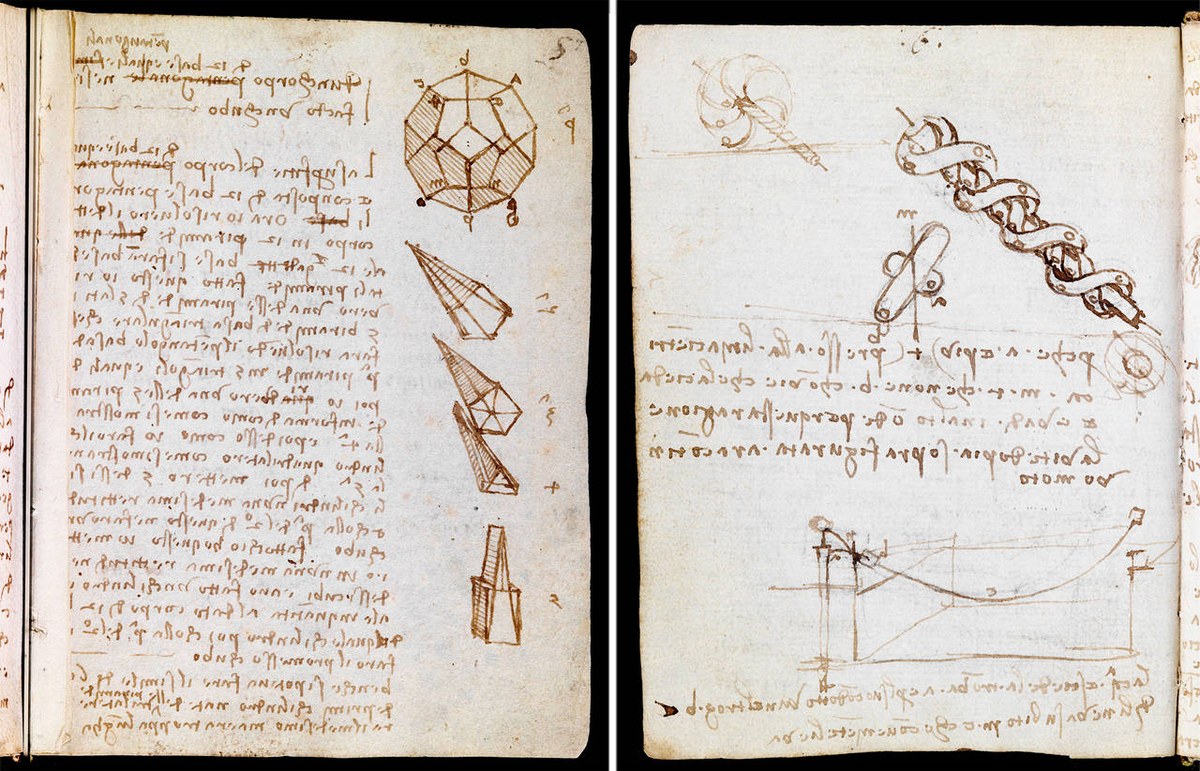 Da Vinci’s notebook, Victoria and Albert Museum, London
Why did the sharpest people, the ones with the biggest achievements behind them, keep notebooks and write?
The reason is working memory, a feature and a weakness in everyone’s brain.
The whiteboard in your head: working memory
Your head holds a lot of memories. Some you can call up any time, like your family’s names or your address. Some your body knows without being able to explain them, like riding a bike or singing a song. These last a few years at the short end, a lifetime at the long end. But some memories go much faster.
Working memory is the kind you use for a moment and drop soon after, like a whiteboard. Counting objects up from one, holding on to what’s being said in a conversation, keeping a shopping list in your head. All of that is working memory. It matters for solving problems. Maybe that’s why working memory predicts learning ability better than IQ does.
Working memory is useful for information you only need briefly and can throw away, but it comes with two problems.
First, working memory disappears fast (30 seconds).
Second, it can’t hold many things at once.
 Working memory holds three things at a time for 30 seconds.
Working memory is the most flexible, fastest, most useful memory you have, and it vanishes quickly and holds very little. People often say humans can keep seven things in mind at once, but recent research puts unfamiliar concepts at four, tops. Even that shrinks depending on how well you’re concentrating. So it’s fair to assume you can think about three things at a time. Life keeps handing us problems too complicated for that. Even picking lunch gets hard past four options. Think of working memory as 3 by 30. Without deliberate effort to remember, a person holds up to three things for 30 seconds.
So we need help.
The way Sam Altman runs OpenAI and works through complicated problems by writing, we can use writing to get past a limited working memory and solve much harder problems.
Want practical tips that make you a little smarter every week?
I cover persuasion, marketing, writing, and the other skills modern life demands.
Subscribe now and get notified when a new post goes up!
A great cook in a tiny kitchen
Note-taking tools like Obsidian and Logseq get called a “second brain” a lot these days.
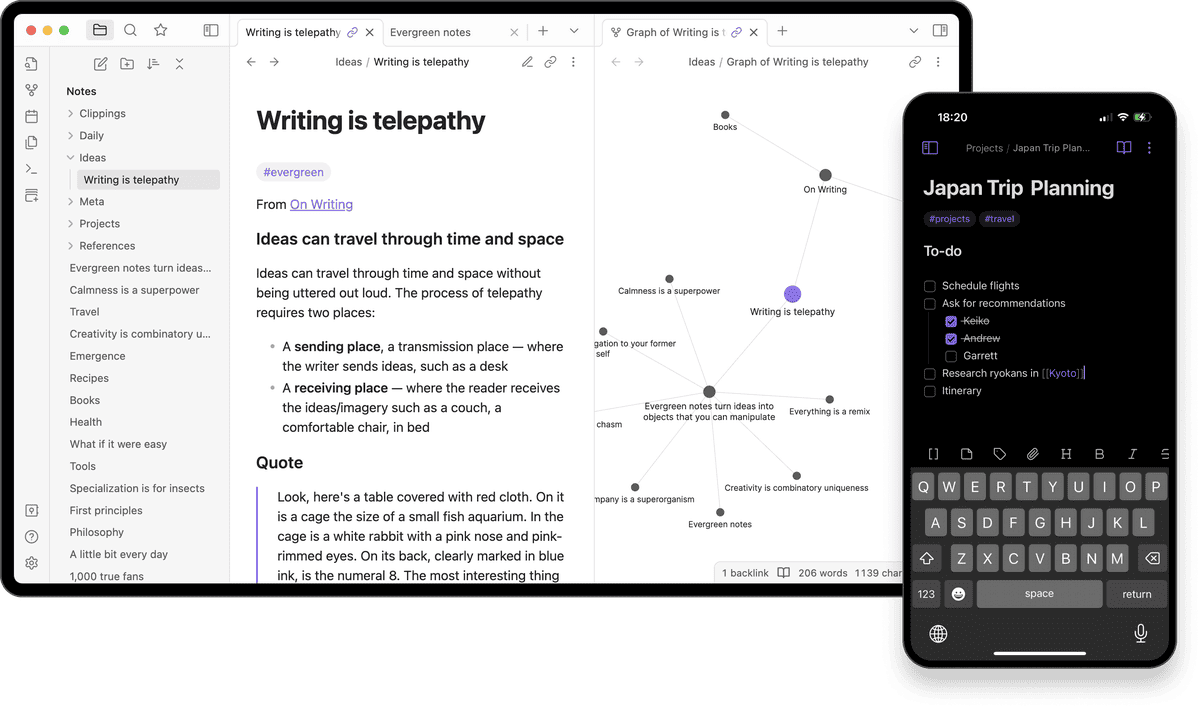 The note app Obsidian https://obsidian.md/
You don’t need a special tool for it. Any note that records a thought is an extension of the brain. A phone whose battery can’t keep up with its performance gets a power bank, and a brain whose working memory can’t keep up with its processing gets writing.
People forget and distort memories easily. I’ll say it again: human memory is fragile. Next to our ability to think, it’s extremely fragile. Emotion has something to do with that too. Which is why you should write. It’s the best way to look at your own thinking from the outside and take a complicated problem one piece at a time (three pieces, if you’re maxing out working memory). That’s probably what Altman meant by writing is externalized thinking.
Put it this way: your brain is a great cook stuck in a tiny kitchen. Have you ever cooked in one? If the counter barely fits a cutting board, you can’t lay out many ingredients. Try to make five dishes at once in that kitchen and it turns into chaos. You finish one dish at a time so the counter doesn’t overflow, or you cook dishes with similar ingredients together. However good the cook is, a cramped kitchen keeps the skill from showing. What that cook needs is a table to set ingredients down on for a minute. The counter that’s far too small for the cooking skill is our working memory, and the table that holds a half-finished dish is writing.

Working memory doesn’t only build up your problem-solving, though. You can put it to work when you write, too.
Readable writing is juggling
Understand working memory and you can write better. To write something people follow, don’t put four or more new concepts on stage at once. Past four, the reader hits cognitive overload and either loses the thread or loses interest. So readable writing explains at most three new concepts at a time. The less working memory a piece spends, the easier it reads, and the better it is.
A readable sentence structure is one that spends little working memory. Short sentences save working memory as you read them. For a long sentence, the structure has to stay simple. One subject and one predicate per sentence is best, and the shorter the modifier between subject and predicate, the better. With a long modifier in that gap, the reader can forget the subject while reading the modifier. If the modifier can’t come out of the sentence, you can at least put it first, modifier then subject then predicate, so the subject and predicate sit closer together. Use familiar phrasing, and (if this sort of thing is fun for you, I recommend the book “Writing for Busy Readers”)
In that sense readable writing is like juggling. A juggler throws one ball at a time and still keeps several in the air. Good writing never handles more than three concepts at once and still covers plenty of them. This post explained why you can’t handle many concepts at once. The next one will explain how to play with complicated concepts while staying inside the limits of working memory.

Want practical tips that make you a little smarter every week?
I cover persuasion, marketing, writing, and the other skills modern life demands.
Subscribe now and get notified when a new post goes up!
P.S. Working memory is a fairly well-known idea, but I wanted to cover it at least once. It matters a lot for anything I write later about writing or mental models. It also matters for conversation skills like persuasion and empathy. Working memory is one of the important parts in any explanation of human behavior.
And people are born with different amounts of it, but research says working memory can be improved. Subscribe and I’ll show you how to raise the thing that matters more than IQ!
References:
-
Book: Writing for Busy Readers
You might like these too!